The rain that started last night showed no sign of stopping even by morning. On days like this, I listen to the radio inside the tent, checking routes and reading guidebooks while waiting to see how things develop. In the end, the rain hadn’t stopped even past noon, so I decided to give up on setting out. Instead, I decided to write thank-you postcards to the people who had helped me along the way.
When the rain eased up a bit, I ventured out to the coastal breakwater. Seven or eight anglers were there; from their conversation, they seemed like regulars. Peering into their buckets, I saw the standard breakwater catches: horse mackerel and whiting. It looked like they’d had some success despite the rain.
The evening weather forecast said, “Tomorrow will also be light rain as a weak front passes through.” If it’s just light rain, I’ll ride.
作夜からの雨は朝になっても止む気配がありません。そんな時はラジオを聴きながらテントの中でルートのチェックやガイドブックを読んだりしてようすを見ます。結局、昼を過ぎても雨は止まず出発を諦めることに。ならばと道中お世話になった方々へお礼の絵ハガキを書くことにしました。
雨が小降りになったタイミングで海辺の突堤に出てみました。釣り人が7、8人、会話からすると皆さん顔馴染みのようです。バケツの中を覗くと堤防釣りの定番アジにキス。雨の中、釣果が上がったようです。
夜の天気予報では「明日も弱い前線の通過で小雨模様です」、小雨なら走ります。
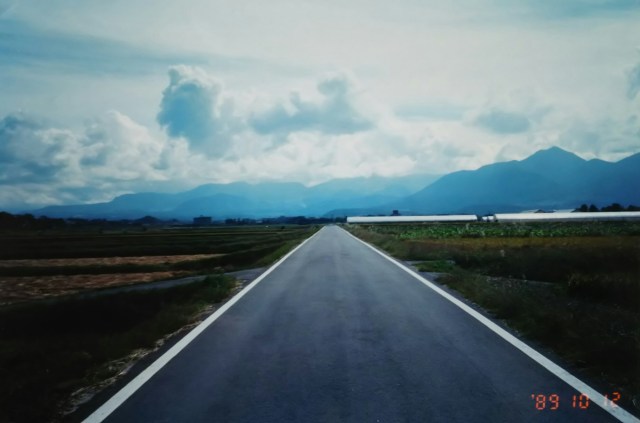
Normally, you’d be driving with Mount Daisen on your left around here, but unfortunately, it was hidden behind clouds all day.
Past Yonago into Shimane Prefecture. From Yasugi, I arrived at my destination for the day, Matsue. It was getting quite late, but I climbed up to the Fudoki no Oka (Chronicles of the Land Hill) south of the city.
According to the Nara period “Izumo no Kuni Fudoki” (Chronicle of the Land of Izumo), this area around Fudoki no Oka was the center of the Izumo province. Well, it’s the world of mythology. However, on the way here, I saw what looked like ancient burial mounds in various places around the city, similar to those in Nara.
It seemed a bit late, and the museum was already closed. That night, I camped in Ryokuzan Park, a little downhill from Fudoki no Oka. According to a stone monument, the park was originally an Army cemetery.
本来ならこのあたりは「大山(だいせん)」を左に見ながらの走行となるのですが、あいにくの天気で一日中雲に隠れていました。
米子を過ぎて島根県へ。安来からこの日の目的地、松江に到着。だいぶ日も暮れてきましたが街の南にある「風土記の丘」に上ってみました。
奈良時代の「出雲国風土記」によると、この「風土記の丘」あたりが出雲の国の中心だとあります。まあ、神話の世界ですが。ただし、来る途中市内の所々で奈良同様に古墳らしきものを見てきました。
ちょっと遅かったようで資料館はすでに閉まっていました。この日は風土記の丘から少し下った緑山(りょくざん)公園でテント泊。石碑によると公園はもともと陸軍の墓地だったようです。

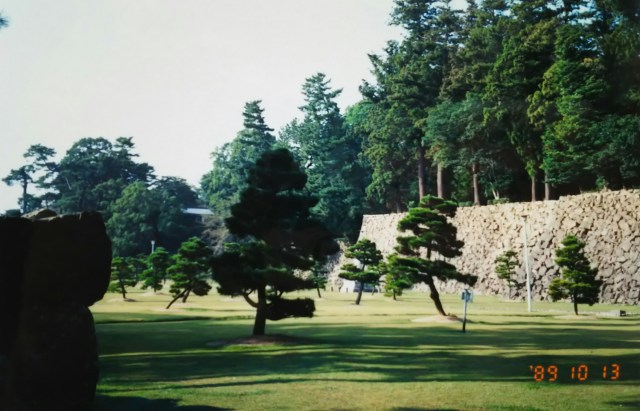
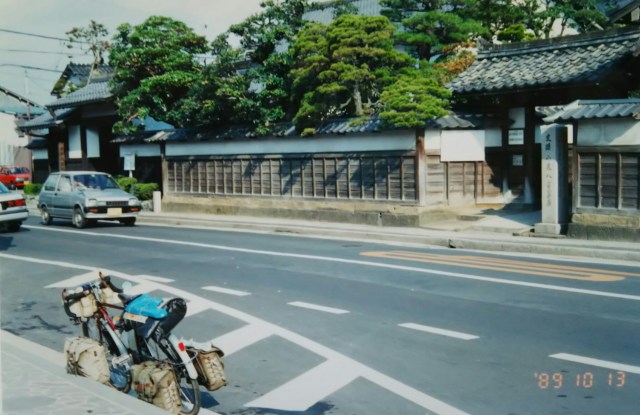
This photo shows Matsue Station. Crossing the bridge and continuing north with the stone walls of Matsue Castle on your right brings you to “Koizumi Yakumo’s Former Residence.” The house to its left (at the back of the photo) is the “Koizumi Yakumo Memorial Museum.” It displayed items donated by the Koizumi family.
Koizumi Yakumo(1850-1904), also known as Lafcadio Hearn, was a naturalized Japanese citizen. He was a Greek-born British national (possibly holding dual citizenship), an English teacher, and a novelist. His most famous work is the ghost story “The Tale of the Earless Hōichi.” His surname, Koizumi, comes from his Japanese wife’s family name, while ‘Yakumo’ derives from the Izumo poetic phrase “yakumo tatsu” (rising clouds).
“Yakumo tatsu” refers to layers of clouds, or clouds rising one after another. This connects to “rising clouds… Izumo.” The area south of the “Fudoki no Oka” site I visited the previous day is called Yakumo Village, which includes Mount Yakumo, standing at 424 meters (1,394 feet). “Yakumo tatsu…” is said to be Japan’s first waka poem, composed by Susanoo-no-Mikoto himself for his wedding.
To travel from Matsue to Izumo, there are two routes: Route 9 along the southern shore of Lake Shinji and National Route 431 along the northern shore.
Route 9 runs parallel to the San’in Main Line railway, while Route 431 runs alongside the local Ichibata Electric Railway. Both routes cover about 40 kilometers, so I decided to take it easy, enjoying the view of Lake Shinji while traveling alongside the Ichibata Electric Railway.
写真は松江駅です。橋を渡り松江城の石垣を右手にさらに北へと行くと「小泉八雲の旧居」に出ます。左隣(写真の奥)の家屋は「小泉八雲記念館」です。小泉家からの寄贈品が展示されていました。
日本に帰化した小泉八雲ことラフカディオ・ハーンはイギリス国籍(二重国籍とも)のギリシャ人、英語教師で小説家です。よく知られているのが怪談「耳なし芳一」です。苗字の小泉は日本人妻の家名、八雲は出雲の枕詞「八雲立つ」に由来しています。
「八雲立つ」とは八重の雲、次から次へと雲がわき立つさまをいいます。つまり「いづる雲…出雲」につながります。私が前日訪れた「風土記の丘」の南に接した地名は八雲村といい、村内には標高424mの八雲山があります。
「八雲立つ……」は須佐之男之命(すさのおのみこと)が自ら婚礼のために詠んだ日本で最初の和歌といわれています。
松江から出雲へ行くには、宍道(しんじ)湖の南側の9号線と北側の国道431号線の二つのルートがあります。9号線は山陰本線、一方の431号線は地方ローカルの一畑(いちばた)電鉄と並行してしています。どちらの国道を行っても距離は40キロほど、ならばノンビリと宍道湖を眺めながら一畑電鉄と並走することにします。
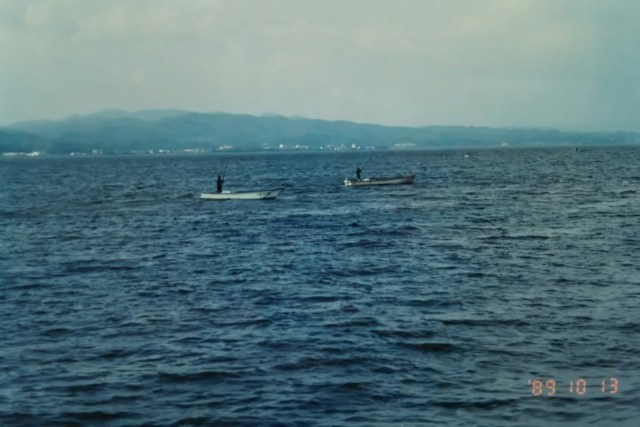
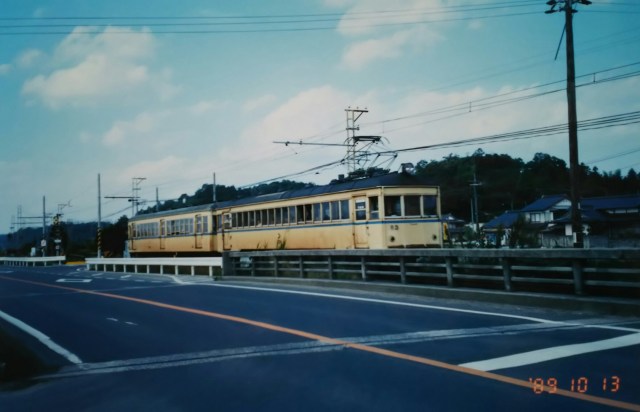
Lake Shinji is famous for its freshwater clam fishing. Can you see the small boats fishing for clams in the photo? Next is the Ichibata Electric Railway, often called Japan’s most retro railway, locally known as “Bata-den.”
Despite running on flat land, the Ichibata Electric Railway performs a switchback at Ichibataguchi Station. The train reverses direction, and the driver moves to the other end of the train.
There’s a reason for this switchback. The original Ichibata Electric Railway was built in the late Meiji period, connecting Izumo to the ancient temple of Ibarata-yakushi, known for its healing powers. The temple is located about 3 kilometers north of Ichibataguchi Station, deep in the mountains. During the war, the tracks heading north were deemed unnecessary, and the rails were removed and repurposed for other lines. Even today, the switchback is performed on the small section of rail that remains.
This day was a “Butsumetsu” (an unlucky day in the traditional Japanese calendar), and also a Friday the 13th (?). We arrived at Izumo Taisha, the shrine dedicated to the god of matchmaking. Of course, when it comes to visiting the shrine, the six auspicious days like Butsumetsu or Tai-an (Great Auspiciousness) don’t really matter.
宍道湖はシジミ漁で有名です。写真で小さな舟でシジミ漁をしているのがわかりますか。続いて日本一レトロではといわれる一畑電鉄、地元では「ばたでん」と呼ばれています。
一畑電鉄は平地を走る電車にもかかわらず、途中の一畑口駅でスイッチバックをしています。前後運転方向が入れ替わり、運転手が車両を移るのです。
スイッチバックになったのには理由があります。当初の一畑電鉄は明治の末期に出雲から目にご利益がある古刹、一畑薬師までの区間が敷設されました。薬師の場所は一畑口駅を北へ3キロほどの山の中です。戦時中、不要な路線としてその北へ向かう線路のレールが外され、ほかの路線に転用されてしまいます。今でもそのわずかばかり残ったレールの部分でスイッチバック行っているのです。
この日は仏滅、しかも13日の金曜日(?)。縁結びの神様、出雲大社へ到着しました。もっとも参拝するには仏滅や大安などの六曜は関係ありません。

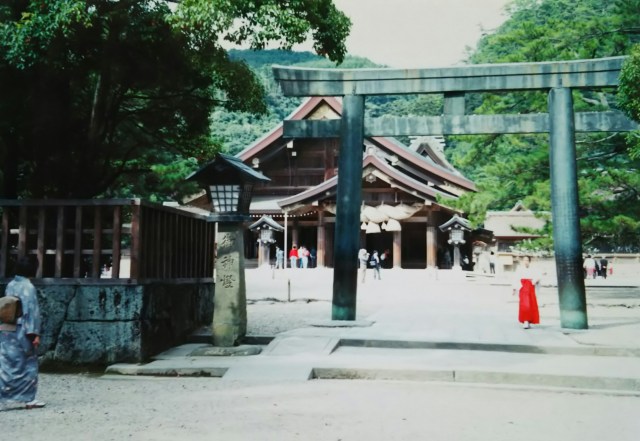
First to greet me were statues of Ōkuninushi-no-Mikoto (also known as Daikokuten) and a rabbit, the deities enshrined at Izumo Taisha. The myth “The White Hare of Inaba” tells the story of Ōkuninushi-no-Mikoto’s quest to find a bride, which is why he is revered as the god of matchmaking.
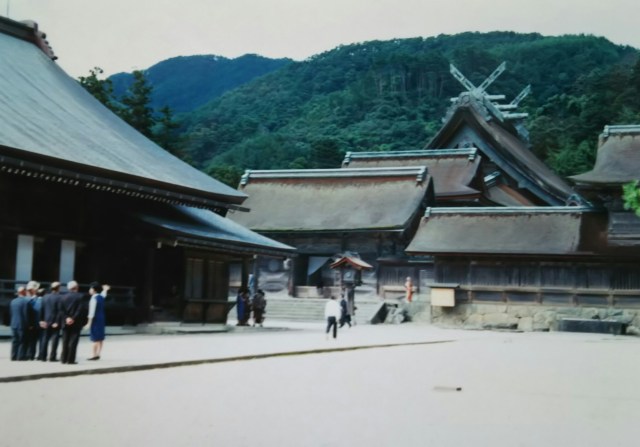
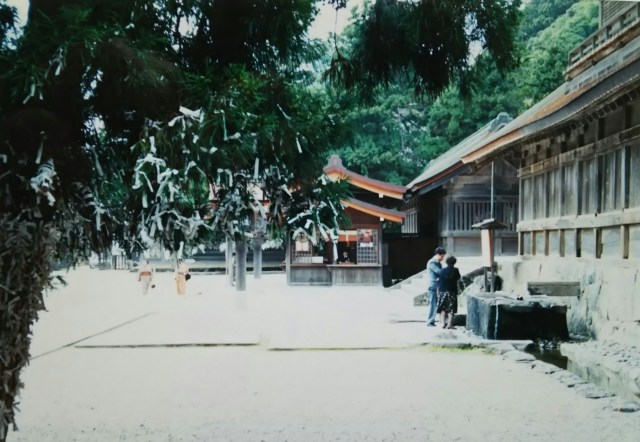
Next, I passed through the bronze torii gate to begin my worship. The large sacred rope marks the “Haiden” (Worship Hall). It was rebuilt after the war due to fire and destruction. Further on is the ‘Yatsuashimon’ gate, beyond which stands the “Honden” (Main Shrine), built during the Edo period. The large chigi (crossbeams) intersecting atop the roof are striking. Finally, a photo of the Yatsuashimon gate from the side. Since you cannot enter the Honden, worship takes place at the Yatsuashimon gate. Countless omikuji (fortune slips) are tied to the tree in front.
Izumo Taisha also had a Mount Yakumo. It was the mountain behind the Grand Shrine. While Susanoo-no-Mikoto is enshrined at various shrines, the Yakumo Shrines found throughout Japan specifically enshrine him. It’s likely that both Mount Yakumo in Matsue and the one at Izumo Taisha have a shrine or small shrine dedicated to Susanoo-no-Mikoto. In the Kojiki or Records of Ancient Matters and the Nihongi or Chronicles of Japan, Ōkuninushi no Mikoto is described as a descendant of Susanoo no Mikoto. Shimane was truly a treasure trove of mythology.
After visiting the shrine, I headed to a public bath and barber shop in Izumo City. After cleansing myself physically and mentally (?), I camped in a tent in the park.
Next time, I’ll head from the San’in region to the Sanyo region, towards Hiroshima.
まず迎えてくれたのは出雲大社の祭神、大国主命(おおくにぬしのみこと=大黒さま)とウサギの像です。神話「因幡の白兎」は大国主命の嫁取り物語、これが縁結びの神様の由縁となっています。
続いて青銅製の「銅鳥居」をくぐって参拝へ。大きなしめ縄があるのが「拝殿」です。出火、焼失により戦後に再建されました。さらに進むと「八足門」、その奥が江戸時代に建てられた「本殿」です。屋根の上で交差する大きな千木(ちぎ)が印象的です。最後は八足門を横から撮った写真です。本殿には入れませんから八足門で参拝することになります。手前の木に無数のおみくじが結ばれています。
出雲大社にも八雲山がありました。大社の裏山がそうです。須佐之男之命は色々な神社の祭神ですが、全国各地にある八雲神社は須佐之男之命を祭神としています。松江と出雲大社のどちらの八雲山にも須佐之男之命を祀った祠か社があると思われます。古事記や日本書紀では大国主命は須佐之男之命の子孫とされています。島根はまさに神話の宝庫でした。
参拝後は出雲市内の銭湯と床屋へ。心身ともに清めて(?)公園でテント泊。
次回、山陰道から山陽道へ、広島へ向かいます。
 My Life with Bicycles