From Hedo Cape, I headed south along the west coast on National Route 58. Unlike the hilly Prefectural Route 70 in Higashi Village, the road was flat, and with the tailwind at my backs, it was an easy ride. From Kunigami Village to Ogimi Village. I camped while watching the sunset dip below the horizon.
Slightly north of the west coast juts out the Motobu Peninsula, like a lump. From 1975 to 1976, the Okinawa International Ocean Expo (commonly known as the Ocean Expo), one of the reversion to Japan commemorative projects, was held at the peninsula’s western tip. I head for the Okinawa Memorial Park, built on that site.
But first, a slight detour. I head to the Nakijin Castle Ruins, located a little way up from the coastline.
辺戸岬から国道58号線で西海岸沿いを南下します。東村の県道70号線とうって変わって道は平坦、加えて追い風を味方に楽な走行となりました。国頭村(くにがみそん)から大宜味村(おおぎみそん)へ。水平線に沈む夕日を見ながらテント泊。
西海岸のやや北寄りにコブのように出っ張った本部(もとぶ)半島があります。1975年から76年にかけて、半島の西端で本土復帰記念事業の一つ、沖縄国際海洋博覧会(通称、海洋博)が開かれました。その跡地の国営沖縄記念公園に向かいます。
その前にちょっと寄り道を。海岸線から少し上った「今帰仁城(なきじんじょう)跡」へ。
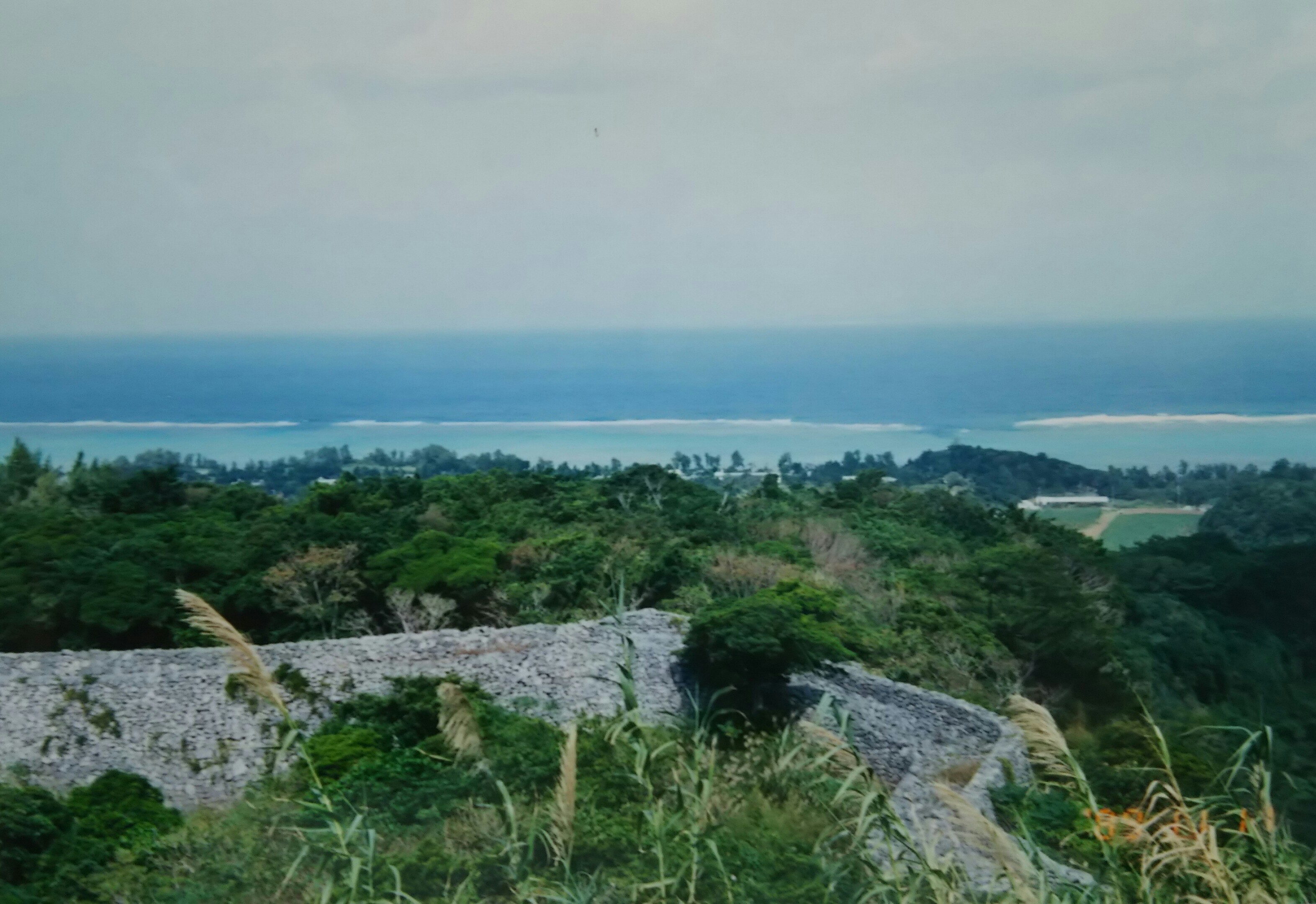
Okinawa was divided into three rival powers until unified as the Ryukyu Kingdom in the 15th century. This Nakijin Castle, also known as Hokuzan Castle, was the stronghold of the northern power, the Kingdom of Hokuzan, at that time.
The photo shows the castle ruins, where only stone walls remain on a hill about 100 meters from the coast. Excavated artifacts from the site reveal that trade with China was flourishing.
In 2000, Nakijin Castle Ruins, along with Zakimi Castle Ruins, Nakagusuku Castle Ruins, Shuri Castle Ruins, and others, were registered as a UNESCO World Heritage Site under the name “Gusuku Sites and Related Properties of the Kingdom of Ryukyu.” “Gusuku” is the Okinawan word for castle.
When I first started traveling around Okinawa, two things struck me immediately: how often everyone used the word “jōtō” (meaning ‘excellent’ or “superb”), and how similar the graves looked to those in Taiwan.
In Okinawa, “jōtō” is widely used as a compliment for actions, appearance, or form, as in “…jōtō sa.”
Okinawan graves, like those in Taiwan, were shaped like houses. Moreover, because the bodies were buried directly in coffins, the graves themselves were large. This burial method, called wind burial, is the same as in Taiwan. After several years, the bodies are exhumed, the bones are washed and purified, and then placed back into urns. The main difference is that Taiwanese graves tend to be more colorful.
Okinawan grave visits are called “Shimi” (Qingming), originating from Taiwan’s Qingming Festival (around April 5th each year). Like Taiwan, Okinawans also visit graves during this spring season. This further shows how the Ryukyu Kingdom was influenced by China in various ways.
After the reversion to Japan in 1972, Japanese burial laws were applied, and cremation became the mainstream practice.
沖縄は15世紀に琉球国として統一されるまで三つに別れて勢力を競いあっていました。当時の北部勢力、北山国の拠城がこの今帰仁城、別名北山城です。
写真は海岸から100mほどの丘にある石垣だけが残る城跡です。城跡内の出土品から中国との交易が盛んだったのがわかっています
2000年、今帰仁城跡は座喜味城跡、中城城跡、首里城跡などとともに「琉球王国のグスク及び関連遺産群」として世界遺産に登録されました。グスクとは沖縄でお城のことです。
私が沖縄を走り始めて真っ先に感じたのが、皆さん「上等」という言葉をよく使うことと、もう一つお墓が台湾のお墓とよく似ているということでした。
「……上等さぁ」のように沖縄では行動や姿、形などの誉め言葉として広範囲に使います。
沖縄のお墓は台湾と同じく家のような形をしていました。しかも、遺体のままを棺に納めて埋葬するため、お墓そのものが大きいのです。この埋葬の仕方は風葬と呼ばれ台湾と同じです。数年後に遺体を取り出して骨のみ洗い清め、改めて骨壺に納めます。違うのは台湾のお墓の方はカラフルだということぐらいです。
沖縄の墓参りは「シーミー(清明)」といわれ、台湾の清明節(毎年4月5日前後)に由来します。沖縄でも台湾と同じように春のこの時期にお墓参りをします。このあたりにも琉球国が中国から色々と影響を受けていたのがわかります。
本土復帰後は日本の埋葬法が適用されるようになり、火葬が主流になってきました。
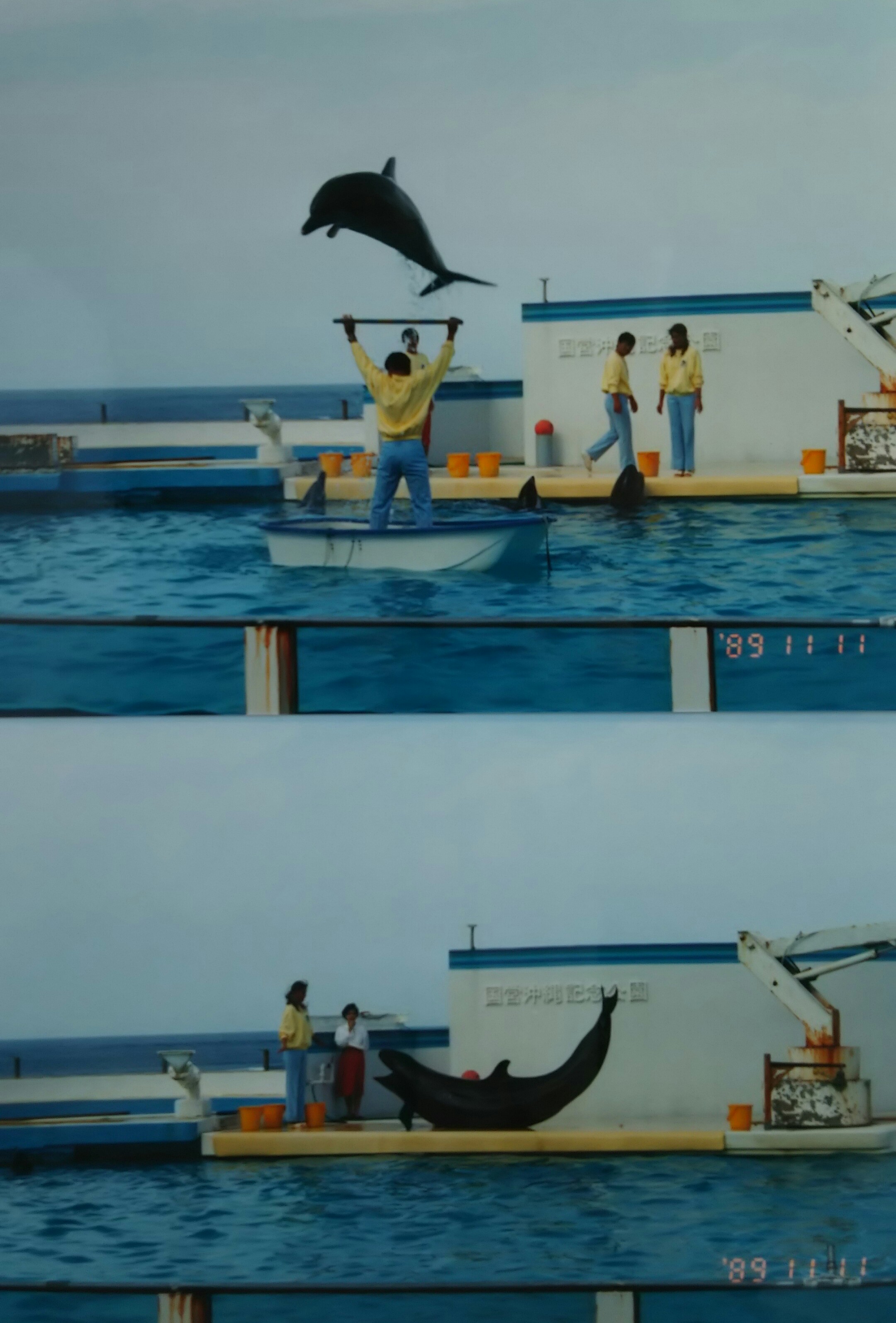
After the Churaumi Aquarium, we watched the dolphin show. Oki-chan the dolphin was incredibly talented. On the other hand, the futuristic city floating in the sea, “Aquapolis,” was a bit underwhelming.
Leaving the memorial park, I headed to Tokuchi Port in Motobu Town.
Actually, my friend U-kun had said, “If you go to Okinawa, please visit Minna Island. It’s a small island, but it’s a great place. I know the captain of the regular ferry, so if you mention my name, he’ll welcome you.” Apparently, during his student days, he spent a summer on Minna Island’s beach, and the captain, who is also an island resident, helped him out a lot back then. It was a slightly uncertain story, but I felt like, “Well, let’s just go and see.”
“Is that it?” A small boat was docked, and a little ways away stood a small building. It seemed to be the office and waiting room for Minna Kaiun, the regular ferry service to Minna Island. I called out to two people talking inside.
“Excuse me. I’m here to see Captain O?”
“Yes. I’m O. And you are?”
“Huh, you’re Mr. O?! I’m H. Actually, I heard about you from my friend U…”
It was a lucky, unexpected encounter. Just as U had said, Mr. S seemed a bit older than me. I explained why I’d come.
“Oh, you’re U’s friend. Sure, you can stay at my place. But there’s nothing on the island, you know.”
“No, I’m just hoping to relax. Thank you.”
So, I ended up staying at Captain O’s house, who kindly welcomed me in.
Until the last ferry, Mr. O told me all sorts of things. He said the regular ferry service to the island runs three or four times a day during the off-season like now, but increases to about ten times a day in summer. Apparently, the boats can get packed with beachgoers.
However, he mentioned that recently, another navigator passed away, and on top of that, the clear weather had meant he hadn’t had a day off in the past month.
Besides me, the last ferry’s passengers included two people who seemed to be islanders. Both addressed Captain O by his first name, S. On a small island like this, everyone might as well be family. I decided to call him S as well.
After loading my bicycle onto the rear deck, I headed to the cabin. With the pleasant hum of the engine, the last high-speed ferry departed. Once we were out of the harbor, Aquapolis, jutting out into the sea, came into view on the right. Aquapolis closed in 1993 and was dismantled in 2000 for reuse of materials.
About 7 kilometers to the island, the speedboat reached the pier in roughly 15 minutes. Minna Island might be one of the closest outlying islands to Okinawa. White sandy beaches stretched out on both sides of the pier. Perhaps because it was getting dark, their whiteness felt even more striking.
“Come summer, this beach gets packed with swimmers. Hold on, I’ll show you around,” Mr. S said before starting to moor the boat. It seemed his work for the day was done.
Crossing the sandy beach, passing the gazebo, and trudging up the slope brought us to a crossroads. Turning right and walking a short distance led us to Mr. S’s house.
He offered me the small room just to the right of the entrance, about four and a half tatami mats in size, saying, “Feel free to use it.” The large room on the opposite side was the living room, and beyond that seemed to be the kitchen. Inside the house was a sun-kissed boy, Mr. S’s only son, T-kun. For certain reasons, it was just the two of them living there.
After taking a shower, I ate the dinner Mr. S had prepared while listening to various stories about the island.
Minna Island has about 30 residents, who apparently migrated from Sezoko Island near the main island several generations ago. Now, Sezoko Island is also connected to the main island by the Sezoko Bridge. Life on the island is half farming, half fishing, but during summer, everyone gets quite busy with beach houses for swimmers and such.
Minna Island is said to have formed on a coral reef and, lacking wells, was originally called “Minna Island” (Waterless Island). It seems “Minna” (waterless) changed to ‘Minna’ (everyone). You can apparently walk around the entire island in just over an hour.
With the map S-san gave me in hand and a paperback book tucked into my back pocket, I set out early in the morning to explore the island.
Minna Island is shaped like a shrimp with a curved back. The “back” part is the long sandy beach on the east side, called Minna Beach, which has a pier. The area around S-san’s house is the center of the island.
I planned to walk from the northern end of the island, following the only road, around to the eastern beach. Beyond the village, I passed the elementary and junior high schools, fields, goats, and cows. Soon, rocky shores appeared ahead of the beach.
If I could just get around the rocks, I’d reach Minna Beach… But it was still before low tide. I walked in my beach sandals, wading through the water, feeling uneasy. Regretting not bringing proper shoes, I gave up.
I retraced my steps. Continuing straight along the road that started from the pier where I turned right last evening, I passed more fields and spotted a small beach.
“This will do.” I pulled out my paperback and lay down. Only the soft sound of waves reached me. Sailboats dotted the offshore waters; it was Sunday, and an around-Okinawa yacht race was underway. I read my book while waiting for the sunset. A leisurely, luxurious time flowed by.
The roar of engines overhead snapped me back to reality. North of Minna Island lies Ie Island, known as a base island. With Kadena Air Base to the south, high-speed helicopters and twin-engine planes fly right overhead.
The sunrise over the Pacific, the sunset over the East China Sea.
I’d always admired these uniquely Okinawan sights. That day, my wish went unfulfilled; just as the sun was about to dip below the horizon, it vanished into the clouds.
“Okinawans are heavy drinkers and love parties” – Mr. S confirmed my impression. That night, the two of us drank like fish. Drunk, we decided to call our mutual friend, Mr. U. The conversation between Mr. S and Mr. U, after years apart, flowed freely.
“I’ve got a hangover,” said Mr. S as he headed toward the pier with Mr. T. I headed to the same beach as the day before. I intended to read, but before I knew it, I was dozing off. Seems I drank a bit too much myself.
Before I knew it, rain started falling. I took shelter under the lone tree on the beach, waiting out the rain for a while. There were already guests there—several blue-winged butterflies had already taken shelter from the rain. What’s more, they were all perched in a row on a single thin branch. They didn’t seem to mind me at all, showing no sign of fleeing.
When the rain turned to drizzle, I ventured out onto the beach as the tide receded. Crabs scurried busily around my feet, and small fish swam in the tide pools among the rocks. Sea cucumbers bobbed up and down with the tiny waves, and brightly colored starfish swayed gently.
Mr. S’s friend K returned from his errands, so we had a party that night. K is a scuba diving instructor originally from Tokyo. He’s been in Okinawa for 12 years and on Minna Island for 4. Then there was K’s female assistant and another island fisherman, Mr. R. Including me, there were five adults and S-san’s son T.
The main dish that night was the filefish Mr. S caught between his regular ferry trips. True to his seafaring roots, S-san skillfully prepared it as sashimi and whipped up the signature liver soy sauce in no time. It turned out S-san, K-san, and R-san all loved mahjong. They often played together when the sea was rough.
Being a huge mahjong fan myself—and since mahjong is traditionally a four-player game—my room, where I was sleeping, transformed into a mahjong room. The party was cut short as the four of us started playing. Result: I lost ¥8,000.
The wind was strong that day, causing the scheduled ferry to be canceled. It’s ultimately the captain’s call, but apparently, ferries cancel when wind speeds exceed 15 meters per second.
“Mr. S, isn’t this your first day off in a while?”
“Yeah, we’ll start gathering around 9.”
It seemed the mahjong players from last night were gathering again. Having lost the night before, I was feeling like, “I want to play mahjong.” My chance for revenge had arrived. Result: I ended up +¥22,000 that day. Net gain of +¥14,000 compared to the previous day.
Wind speed that day was 7 m/s, so the regular ferry was running. I decided to leave Minna Island too. At S-san’s suggestion, I was allowed into the second-floor wheelhouse. Captain S-san, his son T-kun, and I set sail for Tokuchi Port on the main island. There were no other passengers.
「美ら海水族館」の後はイルカショーを見物します。イルカのオキちゃんはとても芸達者でした。一方、イマイチだったのが海に浮かぶ未来都市「アクアポリス」でした。
記念公園を後に本部町の渡久地港へ。
実は私の知人U君が「沖縄へ行ったら、ぜひ水納島を訪ねて下さい。小さな島ですけどいい所ですよ。定期便の船長と知り合いだから、僕の名前を言えば歓迎してくれますよ」とのこと。聞けば学生時代に水納島の浜辺でひと夏を過ごし、その時に島の住人でもある船長が何かとヨクしてくれたそうです。少々心もとない話ですが「とりあえず行ってみるか」そんな気持ちでした。
「あれかな?」小さな船が一艘接岸されており、ちょっと離れたところに小さな建物があります。どうやら水納島行きの定期便、水納海運の事務所兼待合室のようです。中で何やら話している二人に声をかけます。
「すいません。船長のOさんを訪ねて来たんですけど?」
「はい。私がOですけど、あなたは?」
「えッ、Oさんですか?! 私はHといいます。実は知り合いのU君から……」
ラッキーにもいきなりの出会いでした。U君がいうようにSさんは私よりちょっと年上の感じです。訪ねた経緯を説明します。
「そう、Uの知り合いなの。いいよ、ウチに泊まれば。でも島には何にもないからさぁ」
「いや、ノンビリできればと思ってますから。ありがとうございます」
ということで快く迎え入れてくれた船長Oさんの家に厄介になることに。
最終便までの間、Oさんが色々と話をしてくれました。島への定期便はオフシーズンの今は一日3、4便、夏になるとそれが10便ほどに増えるそうです。海水浴客で船が満員になることもあるそうです。ただし最近もう一人の航海士が亡くなった上に晴天続きでこの1ヶ月間休みが取れてないとのことです。
最終便の乗客は私の他に島民らしい人が二人。二人とも船長のOさんを下の名前Sで呼んでいます。小さな島のこと、皆さん家族みたいなもんかも知れません。私も同様にSさんと呼ばせてもらうことにしました。
自転車を後部デッキに運ぶと船室に。小気味良いエンジン音ととも最終便の高速艇が出港します。港の外に出ると右手に海に突き出たアクアポリスが見えてきました。1993年にアクアポリスは閉館、2000年に廃材再利用のため撤去されました。
島まで7キロほど、高速艇は約15分で桟橋に到着。水納島は沖縄で最も近い離島の一つかもしれません。桟橋の左右に白い砂浜が続いています。あたりが暗くなってきたせいか、その白さがより感じられます。
「夏になると砂浜が海水浴客でイッパイになるさぁ。今、案内するから待っててよ」そういうとSさんは船の係留作業に取りかかりました。どうやら本日の仕事はこれで終了のようです。
砂浜を横切り、東屋(あずまや)を横目にダラダラ坂を上がると十字路に出ました。右折してしばらく行くとSさんの家に到着です。
玄関を入ってすぐ右の四畳半ほどの部屋を「好きに使っていいよ」と提供してもらいました。反対側の大きな部屋が居間、その奥が台所ようです。家には日に焼けた男の子が、Sさんの一人息子T君です。訳あって二人暮らしということです。
シャワーを浴びた後、Sさんが用意してくれた夕食を食べながら色々と島の話を聞きます。
水納島の島民は30人ほど、何代か前に本島近くの瀬底島から移住してきたそうです。今はその瀬底島も瀬底大橋で本島とつながっています。島の生活は半農半漁ですが、夏場は海水浴客用の海の家などで皆さんかなり忙しいとのこと。水納島は珊瑚礁の上にできた島といわれ、井戸もないことからもともと「水無し島」と呼ばれていました。「みずなし」が「みんな」に変化したようです。歩いて1時間ちょっとで島を一回りできるそうです。
Sさんからもらった案内図を手に、文庫本を一冊お尻のポケットに、朝から島内の散策に出ます。
水納島は腰の曲がった海老のような形をしています。背中の部分が水納ビーチと呼ばれる桟橋のある東側の長い砂浜です。Sさんの家の周辺が島の中心になります。
一本道の突き当たり、島の北側から東側のビーチへと回るつもりです。集落の先に小中学校と畑、山羊や牛の姿も、やがて浜辺の先に岩場が表れます。岩場を回り込めば水納ビーチ側に出られるのですが……。まだ干潮前、海水に浸かりながらビーチサンダルで歩いたものの不安を感じます。靴を履いてくればと後悔しつつ諦めました。
来た道を戻ります。昨夕、右折した桟橋から続く道をそのまま真っ直ぐ進みます。畑の横をさらに進むと小さな浜辺が見えてきました。
「ここにしよう」文庫本を取り出して横になります。聞こえるのは小さな波の音だけ。沖合に帆影がチラホラ、この日は日曜日ということもあり沖縄一周のヨットレースが行われていました。文庫本を読みながら夕日を待ちます。ノンビリとした贅沢な時間流れて行きます。
上空の爆音で現実の世界に戻されました。水納島の北には基地の島として知られる伊江島があります。嘉手納基地が南に位置しているため、ちょうど頭の上を高速ヘリや双発機が飛行して行くのです。
太平洋から昇る朝日、東シナ海へ沈む夕日。これまでも沖縄ならでは光景を眺めてきました。この日もとの思いはかなわず、夕日は水平線に沈む間際に雲の中に隠れてしまいました。
「沖縄の人は酒が強くて酒宴好き」Sさんも私の印象通りです。この夜は二人でシコタマお酒を飲みました。共通の知人U君に電話をかけることに、酔った勢いというヤツです。何年かぶりのSさんとU君との会話は弾んでいました。
「二日酔いだよ」とSさんはT君と一緒に桟橋へ向かいました。私は前日と同じ浜辺へ向かいます。読書のつもりが、いつのまにかウトウト、私もチト飲み過ぎたようです。
いつの間にか雨が降り始めました。浜にポツンと一本ある木の下に逃げ込み、しばしの雨宿りです。そこには先客が、なんと青い羽根の蝶々が何匹もすでに雨宿りをしていました。しかも一本の細い枝に並んで留まっています。私など気にしてないのか、逃げるようすもありません。
小雨になったところで潮が引いた浜に出てみます。足元では蟹がせわしなく動き回り、岩場の潮だまりでは小魚が泳いでいます。小さな波の動きにあわせて海ウシがぷかりぷかり、色鮮やかなヒトデも揺れていました。
Sさんの友人Kさんが所用から戻ったこともあり、この夜は宴会になりました。Kさんは東京出身のスキューバ・ダイビングのインストラクター、沖縄に12年、水納島に来てから4年も経つそうです。そしてKさんのアシスタントの女性、もう一人島の漁師Rさん。私を含めて大人5人と息子のT君がメンバーです。
Sさんが定期航路の合間に釣ったカワハギがこの夜のメインです。さすが海人(うみんちゅ)、Sさんは手際よく刺身におろすと、カワハギならではの肝醤油もあっという間に作ります。ここでSさん、Kさん、Rさんと皆さん麻雀が好きと判明。海が荒れると3人でよく麻雀をするとのこと。私も麻雀大好き人間、麻雀はもともと4人でやるゲーム。私が寝起きしている部屋が麻雀ルームに変わると宴会もそこそこに4人で麻雀が始まりました。結果、私はマイナス8,000円。
この日は風が強くて定期便が欠航になりました。あくまで船長の判断によるのですが、風速15m以上で欠航となるそうです。
「Sさん、久々の休みじゃないですか」
「うん、9時頃から集まるさ」
昨夜の麻雀のメンバーが集まってくるそうです。前夜、負けてる私としては「麻雀やりたいな」そんな気分でいたのです。雪辱のチャンス到来。結果、この日はプラス22,000円。前日との差し引きプラス14,000円。
この日の風速は7m、定期便が運行します。私も水納島を離れることにしました。Sさんの勧めで2階の操舵室に入らせてもらいます。船長Sさん、息子のT君、そして私の3人で本島の渡久地港へ向けて出航です。他に乗船客はいませんでした。
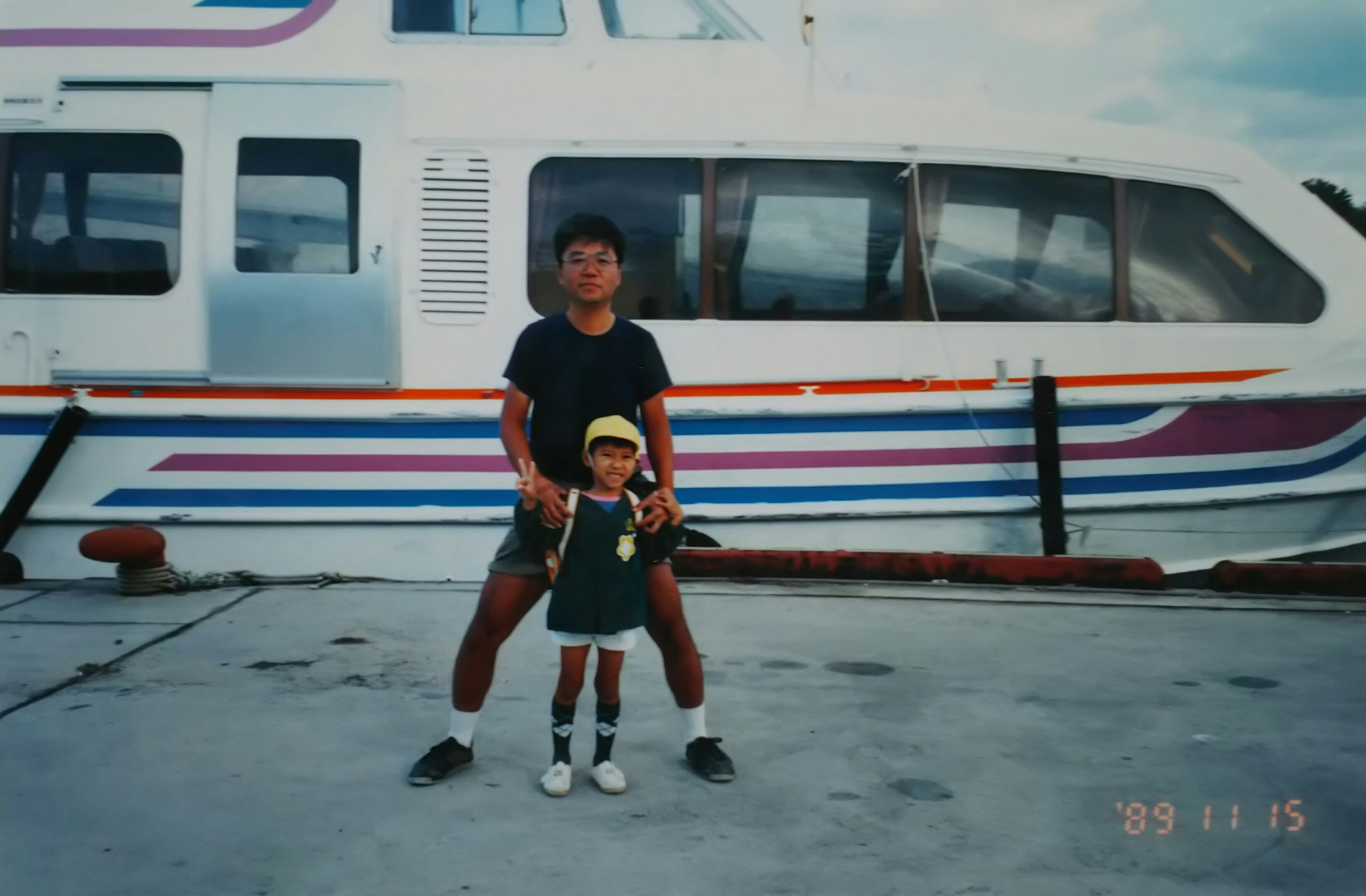
This is a photo of T-kun and me taken by S-san at Toguchi Port before we said goodbye. Behind us is the high-speed boat S-san was piloting.
サヨナラの前に渡久地港でSさんが撮ってくれたT君との写真です。後がSさんの操縦する高速艇です。
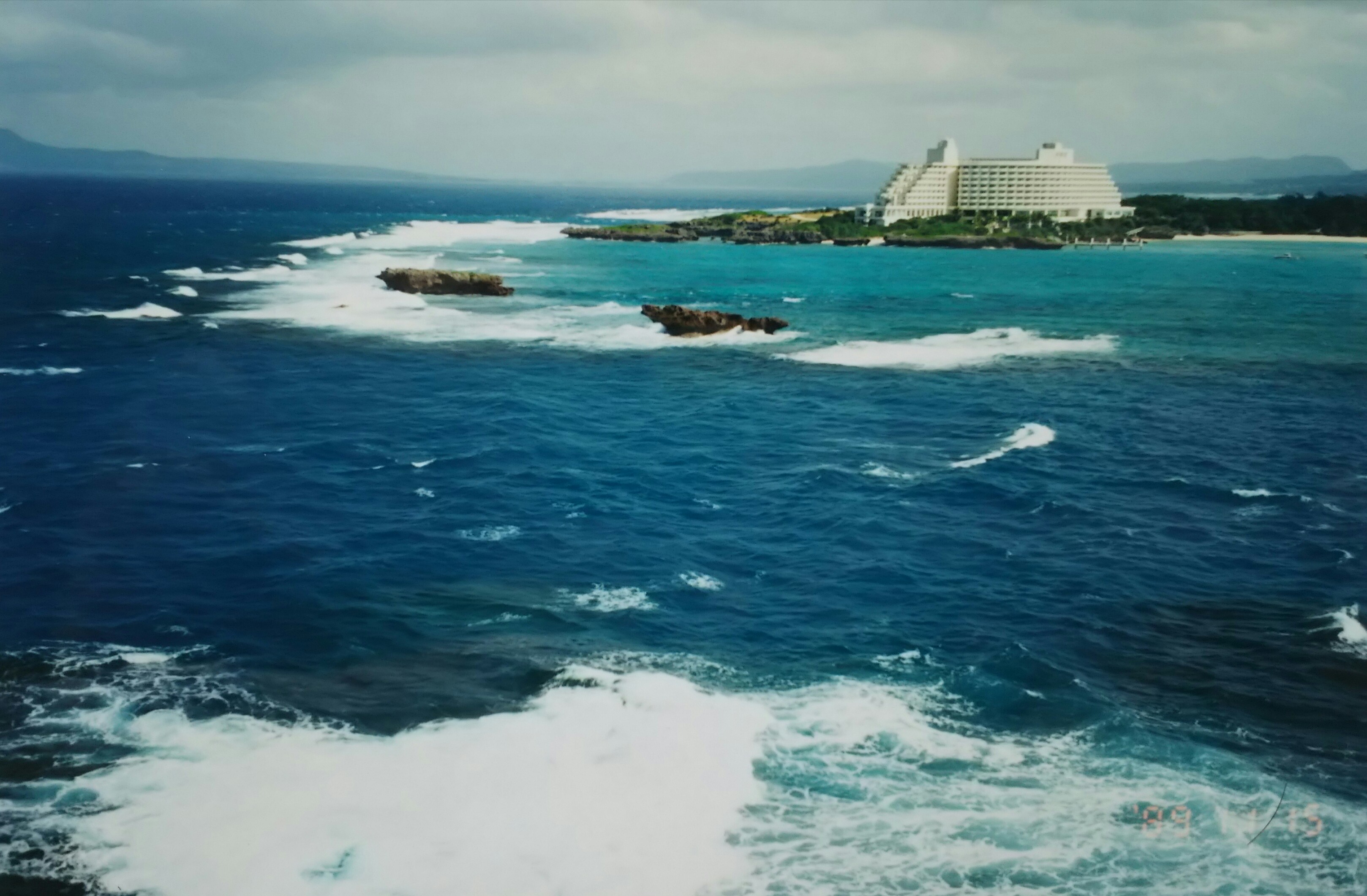
Riding the tailwind from Toguchi, I covered about 100 kilometers in one go to Manza Beach, Zanpa Cape, and then Naha. The photo shows Manza Beach; the white building is a hotel.
The few days spent on Minna Island became something special during this continuous cycling journey of daily travel. The ferry to Kagoshima departs at 8 AM tomorrow morning; staying at a sauna in Naha city tonight.
Later, I sent S-san, who helped me out, some Japanese sake: “Koshino Kanbai” and “Kubota”. Plus, we played mahjong?!
Next time, I’ll head back to Kyushu and travel north through Kagoshima, Miyazaki, and Oita.
渡久地から追い風にのって万座ビーチ、残波岬そして那覇へと一気に約100キロを走りました。写真は万座ビーチ、白い建物はホテルです。
水納島で過ごした数日間は日々移動の続く自転車旅で特別なものになりました。鹿児島行きのフェリーは明朝8時発、那覇市内のサウナ泊。
後日、お世話になったSさんに日本酒「越乃寒梅」と「久保田」を送りました。麻雀もプラスですし?!
次回、九州に戻り鹿児島、宮崎、大分と北上します。
 My Life with Bicycles