Outbound: Terukuni Ferry, Return: Ōshima Transport (now Maruei Ferry) New Akebono Maru, 6,500 tons, Departing at 8:00 AM, having just entered service two months prior.
往路は照国郵船のフェリー、復路は大島運輸(現マルエーフェリー)のニューあけぼの丸 6,500 t 、2ヶ月前に就航したばかり、朝8時の出航です。

The photo shows Yoron Island. The sea surrounding it, encircled by coral reefs, is said to be as beautiful as Okinawa’s. I couldn’t take photos on the way there due to sunset, so this is a reshot. The wind, mixed with rain, was strong at 20 meters per second, and the ferry couldn’t dock at Wadomari Port on the next island, Okinoerabu.
At 8:30 AM on November 16th, I arrived at Kagoshima Port after 10 days. From here, I’ll take National Route 10, which runs parallel to the Nippō Main Line, connecting Kagoshima City and Kitakyushu City, heading towards Miyazaki and Ōita.
♪ “Flowers are Kirishima, tobacco is Kokubu, what burns and rises is Ohara-ha Sakurajima…”
I’d like to say I drove along Kinko Bay in high spirits, humming the “Ohara-bushi” folk song, but the ash fall from Sakurajima made my eyes sting.
写真は与論島、周辺を珊瑚礁に囲まれた海は沖縄にも負けず劣らず美しいといわれています。往路は日没で写真が撮れず改めての一枚です。雨混じりの風は風速20mと強く、フェリーは次の沖永良部島の和泊港には接岸できませんでした。
11月16日の朝8時半、10日ぶりに鹿児島港へ。この先は日豊本線と並走する形で鹿児島市と北九州市を結ぶ国道10号線を走り宮崎、大分へと向かいます。
♪「花は霧島 煙草は国分 燃えて上がるは オハラハー桜島……」
「おはら節」を口ずさみながら錦江湾沿いを気分よく走ります、といいたいところですが桜島の降灰で目がチカチカ。
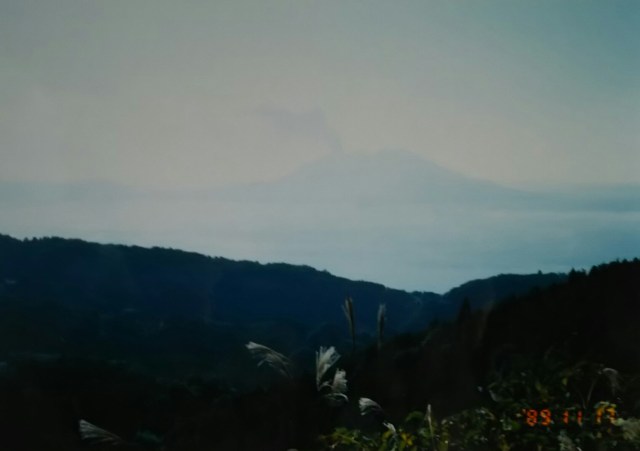
This photo shows Kinko Bay taken from Route 10 after passing Kokubu. Smoke continues to rise from Sakurajima. That night I camped in Miyakonojo, Miyazaki Prefecture—it definitely felt colder compared to Okinawa. Still, the heavy traffic on Route 10 was overwhelming.
From Miyakonojo to Miyazaki. Avoiding the busy Route 10, I took National Route 269, which has some ups and downs. Just before Miyazaki, I turned off Route 269 towards “Aoshima.”
写真は国分を過ぎた10号線沿いから撮った錦江湾です。桜島からは相変わらず噴煙が上がっています。この日は宮崎県の都城でテント泊、やはり沖縄に比べると寒く感じます。それにしても10号線の交通量の多さには閉口です。
都城から宮崎へ。交通量の多い10号線を避け、多少アップダウンのある国道269号線を行きます。宮崎の手前で269号線を外れて「青島」へ。
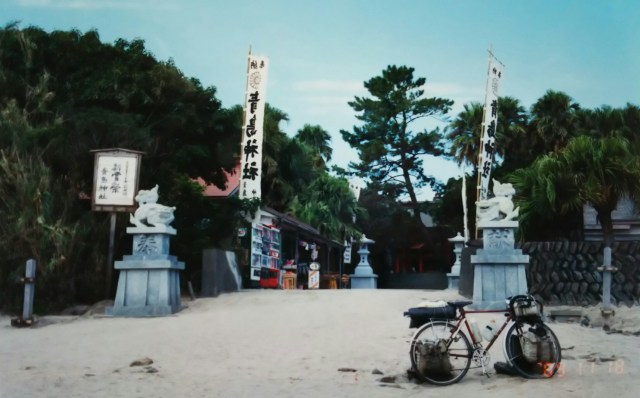

Aoshima is a small island just over one kilometer in circumference, accessible via a bridge. Located near the center of the island is Aoshima Shrine, pictured here. It enshrines deities associated with the mythological figures Urashima Taro and the deities of the sea and mountains, which inspired the fairy tale “Urashima Taro.”
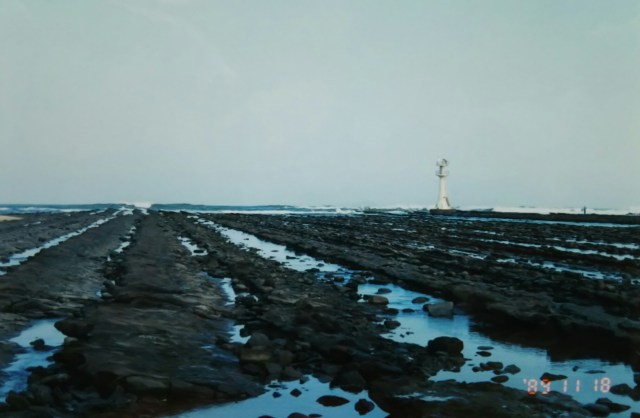
Known as a deity for matchmaking, the former Emperor also visited here with the Crown Princess during his time as Crown Prince. Surrounding the shrine is a unique geological feature, the “Devil’s Washing Board,” where only the sandstone has been eroded by the waves.
青島は周囲1キロちょっと小さな島、橋を渡って行けます。島の中ほどにあるのが写真の「青島神社」です。おとぎ話「浦島太郎」の元ネタである神話の海幸彦、山幸彦にまつわる神様を祀っています。縁結びの神様として知られており、退位された上皇陛下も皇太子時代に妃殿下とともに訪れています。神社の周りは波によって砂岩のみ削られた奇観、その名も「鬼の洗濯板」です。
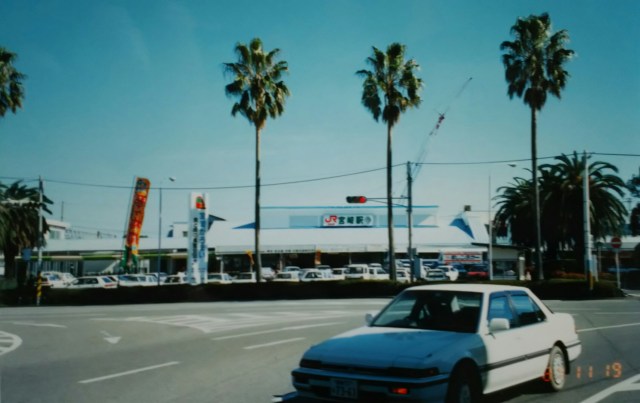
In Miyazaki, I plan to visit two acquaintances I worked with in Tokyo. However, they’re currently on a company retreat to Kirishima and will be camping on the Ōyodo River floodplain for two consecutive nights until they return to work on Monday. The nights get chilly.
The photo shows Miyazaki Station. The tall trees are Phoenix palms, the prefecture’s official tree. First planted in a city park in the early Taisho era, they’re now seen everywhere in the city, not just along the main roads.
From Miyazaki to Hyūga, the sunshine feels warm, if only the wind weren’t blowing. Camping along the Gokase River in Nobeoka, the city of Asahi Kasei, occasionally catching glimpses of the Hyūga Sea to the right.
After passing Nobeoka, Route 10 and the Nippō Main Line run parallel through deep mountains. Crossing the Sōtarō Pass at the prefectural border, Sōtarō Station on the Nippō Main Line comes into view on the right. Finally, I entered Oita Prefecture, the last stop in Kyushu. The name Sotaro comes from Sumoto Sotaro, a local official from the Takeda domain.
Descending to Saiki, I parted ways with the Nippo Main Line running along the coastline and took Route 10 to the “Furen Limestone Cave” in Nozucho, Usuki City.
宮崎では東京で一緒に仕事をした知人の二人を訪ねるつもりです。ところが彼らは霧島へ慰安旅行中、出社する月曜日まで大淀川の河川敷で二日連続のテント泊、夜は冷え込みます。写真は宮崎駅。高く伸びているのは県の木フェニックス、大正初期に市内の公園に初めて植えられましたが、今では街道沿いはもちろん、市内のいたるところで見られます。
宮崎から日向へ、風さえなければ日射しは暖かく感じられます。右手に時おり日向灘を望みながら旭化成の街、延岡の五ヶ瀬川沿いの公園でテント泊。
延岡を過ぎると10号線と日豊本線は山深い中を並走していきます。県境の宗太郎峠を越えると右手に日豊本線の宗太郎駅が見えます。いよいよ九州の最後の大分県に入りました。宗太郎の地名はこの地の役人、竹田藩の洲本宗太郎によります。
一旦、佐伯に下ると海岸線を行く日豊本線と別れ、10号線を臼杵市野津町の「風連鍾乳洞」へ。

Furen Limestone Cave may be only 500 meters long, but its narrow entrance has prevented internal weathering, making its milky-white stalactites and stalagmites reputed to be Japan’s most beautiful.
That night, I camped at Kicchomu Land, the comprehensive sports complex in the same town of Nozu.
When you hear “Kicchomu,” drinkers immediately think of Nikaido Shuzo’s barley shochu “Kicchomu,” but in Oita, it’s known as “Kicchomu-san,” a master of quick wit and the protagonist of folk tales. That master of wit was Hirota Kichiemon, the village headman of this Nozu area. Kichiemon became “Kicchomu” through a dialectal shift.
In the morning, as I was leaving, a construction worker at Kicchomu Land gave me some sweet potatoes. For lunch, I boiled them in a little water and steamed them; for dinner, I made rice cooked with the sweet potatoes. On the way down to Usuki town, I visited the Usuki Magaibutsu (Usuki Rock-Carved Buddha).
風連鍾乳洞は距離こそ500mと短いものの間口が狭いため内部は風化しておらず、乳白色の鍾乳洞は日本一美しいといわれています。
この日は同じ野津町の総合運動場「吉四六(きっちょむ)ランド」でテント泊。
吉四六というと呑兵衛はすぐに二階堂酒造の麦焼酎「吉四六」を思い浮かべますが、大分ではトンチ名人で民話の主人公でもある「きっちょむ」さんとして知られています。そのトンチ名人がこの野津の庄屋である廣田吉右衛門です。吉右衛門が「きっちょむ」になまったのです。
朝、出発時に吉四六ランドの工事作業員のオッさんからサツマイモの差し入れがありました。昼飯は少なめの水でゆでて蒸かしイモ、晩飯は炊き込みご飯にしました。臼杵の街へ下る途中「臼杵磨崖仏」へ。
The Usuki Rock-Carved Buddha statues are said to have been carved into the mountainside rock face by a local wealthy man mourning his daughter’s death, spanning the Heian(794-1183) to Kamakura(1183-1333) periods. Approximately 60 stone Buddha statues of various sizes are scattered across four distinct groups.
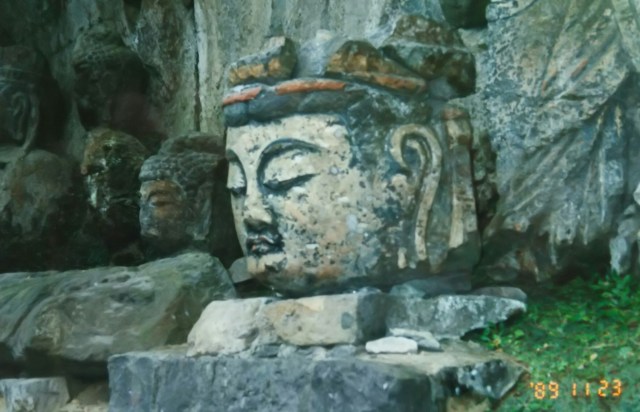
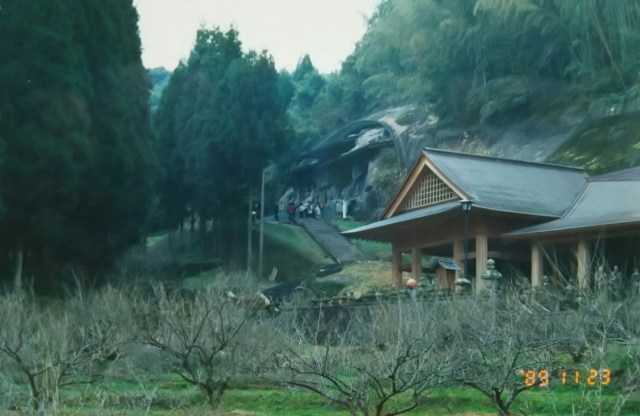
The photo shows the head of the Dainichi Nyorai statue, the central figure among the 13 Buddha statues lining the rock face at the Furuzono Stone Buddha Group. This Buddha head had fallen from its original stone statue and was placed on a pedestal at the time. Today, the stone Buddha groups are protected from wind and rain by a splendid hall like the one in the photo. The fallen Buddha heads were later returned to their original statues.
Six years later, in 1995, the Usuki Rock-carved Buddha Statues were collectively designated as National Treasures.
Next time, I’ll tour the Kunisaki Peninsula from Beppu.
臼杵磨崖仏は土地の長者が娘の死を悼んで平安時代から鎌倉時代にかけて山の中腹の岩場に彫らせたといわれています。大小様々な石仏が合計で60体ほど、4ヶ所の石仏群として点在しています。
写真はその中の一つ、岩肌に13体の仏像が並ぶ古園石仏群の中心、大日如来の仏頭です。この仏頭は石仏の本体から落下しており、この時は台座に乗せられていました。現在では石仏群は写真のような立派な御堂によって風雨から守られています。後に落下していた仏頭は本体に戻され、この6年後の1995年、臼杵磨崖仏はまとめて国宝に指定されています。
次回、別府から国東半島を巡ります。
 My Life with Bicycles