In Osaka, I’ll be staying at my friend’s apartment again while he’s on a .business assignment. Last time, his wife and daughter came from Tokyo, so I felt it was too much to impose and left right away. This time, though, it looks like I’ll be staying a bit longer.
I make my final preparations to return to Tokyo. I mended my torn bag, borrowed the bathroom to wash my tent and sleeping bag, bought cold-weather gear, and wrote New Year’s cards.
Once everything was ready, I headed out from Moriguchi, where my friend lived, to Osaka’s downtown areas by bike and train, thinking “Kita (Umeda)! Minami (Namba)! Shinsekai!” I also wandered around the Tsuruhashi Station area, where I had to transfer.
♪ “She cried, ‘Please come back…’ Goodbye, goodbye, until the day I return…”
I won’t forget the familiar “Soemoncho Blues” or Soemoncho at night, one of Osaka’s most iconic entertainment districts.
What surprised me both last time and this time during my Osaka stays was the right-side cycling. Many cyclists ride on the right side of the road, facing oncoming cars. True, until the Road Traffic Act changed, cycling on the right-hand shoulder was not illegal, but it was a sight I hadn’t seen elsewhere.
“It’s better because you can see cars and people coming from the front” sounds like an excuse. It’s about manners, or rather, attitudes towards safety. Either way, the danger level must be increasing. Osaka has always had the highest number of bicycle-related traffic accidents, both now and in the past. Now, the Road Traffic Act has been revised, and cycling on the right side is illegal, even on the shoulder. Serious cases can even result in fines.
After staying at a friend’s place for five nights, I finally set off for Tokyo on Monday, December 18th. Based on my route so far, only three prefectures remain out of Japan’s 47: Wakayama, Shizuoka, and Kanagawa. First, I headed south along Osaka Bay towards neighboring Wakayama Prefecture.
After borrowing the restroom at a pachinko parlor in Kishiwada, a man who had been watching my bike called out to me. When I told him, “I’m on my way back after cycling around Japan,” he mentioned he’d also toured Hokkaido and Europe on his motorcycle. Over coffee at a cafe, we got into a lively conversation about our experiences, exchanging stories like “Oh, the Alps! Spain!” The man, slightly older than me, was a Tenrikyo minister (equivalent to a pastor or priest in Christianity). He gave me a bottle of Suntory Reserve whiskey, saying, “To help you endure the cold on your journey.” I’m grateful for his kindness.
Finding a campsite on the first day was tough. As night fell completely, I crossed a small pass into Wakayama but couldn’t find a suitable spot. Eventually, after crossing the Kinokawa River, I ended up at the Wakayama Port ferry terminal. It was already 10 PM, so I spent the night in the waiting room.
From Wakayama, I rode along National Route 42, known as the Kumano Kaido, parallel to the Kisei Main Line, heading towards Mie. This route follows the coastline.
I’d like to say “traffic thinned out, making for a comfortable ride,” but the wind was cold, and light snow occasionally fell. Still, riding with the tailwind, I made it from Arita to Gobo. That night, I stayed at the unmanned station next to Gobo, Dojoji Station.
Dojōji Temple is famous for the legend of “Anchin and Kiyohime.” The story goes: “A town maiden, deceived by a monk she had fallen for, flew into a rage, transformed into a giant serpent, and burned the monk alive inside the temple bell.” In Kabuki, it’s known as the dance piece “Kyō-Kajiko Musume Dojōji.”
In the morning, we headed to that Dojōji Temple. Unfortunately, due to a major renovation project lasting four years, we couldn’t enter the main hall.
Arrived at today’s destination, Shirahama. Nanki Shirahama is famous for its hot springs, boasting a history of 1300 years. Immediately headed to the public bathhouse “Muro no Yu” (entrance fee 100 yen). After the long-awaited hot spring, pitched a tent on the deserted beach, Shirahama Beach. Yesterday’s wind had died down, and the sound of the waves felt soothing. The whiteness of Shirahama Beach is something special.
Shirahama boasts a natural open-air bath, “Saki no Yu,” right facing the sea. Legend has it that even the Emperor and feudal lords of Kishu, including Tokugawa Yoshimune (the famous “Rough-and-Ready Shogun” from TV, the 8th Shogun Yoshimune), bathed here in ancient times. It’s located just past the breakwater at the end of Shirahama Beach. Before setting off, I took a quick dip, enjoying the empty seaside bath all to myself.
Being first thing in the morning, it felt incredibly refreshing. This open-air bath is free to use.
大阪では再び単身赴任中の友人宅マンションに厄介になります。前回は奥さんと娘さんが東京から来ていたので遠慮してすぐに出発しましたが、今回はちょっと長くなりそうです。
東京へ戻る最後の準備をします。破れたバッグをつくろい、浴室の洗い場を借りてテントと寝袋を洗濯、防寒対策用の衣類を調達、年賀状も書きます。
全ての準備を終えると「キタ(梅田)だ。ミナミ(難波)だ。新世界だ」と友人宅のある守口から自転車や電車で大阪の繁華街へと出掛けていました。乗り換えのある鶴橋駅周辺もウロチョロしてました。
♪「きっと来てねと 泣いていた…… さよなら さよなら また来る日まで…… 」
お馴染みの「宗右衛門町ブルース」、大阪を代表する歓楽街、夜の宗右衛門町も忘れません。
前回、今回と大阪滞在中に驚いたのが自転車の右側通行でした。多くの自転車が自動車に対向する形で道路の右側を走っているのです。確かに道路交通法が変わるまで右側の路側帯に限り自転車の走行は違反ではありませんでしたが、他の地域では目にしない光景でした。
「前から車や人が来るのがわかるからイイ」言い訳に聞こえます。マナーというか安全に対する考え方です。何れにしても危険度は増しているはずです。今も昔も自転車がらみの交通事故が一番多いのが大阪です。今では道路交通法が改正され、自転車の右側通行は路側帯であっても違反です。悪質な場合は罰金の対象にもなります。
友人宅に5泊した後、12月18日(月)いよいよ東京へと出発します。これまでのコース取りで、47都道府県のうち残るは和歌山県、静岡県、神奈川県の3県。まずは大阪湾沿いを南下、お隣の和歌山県へ向かいます。
岸和田のパチンコ屋でトイレを借りて出てくると、私の自転車を見ていた男性から声をかけられました。「日本一周して帰る途中です」と伝えると、その男性もバイクで北海道やヨーロッパをツーリングしたとのこと。喫茶店でコーヒーを飲みながら「やれアルプスだ。スペインだ」と互いの経験談で話が弾みました。やや年上という男性は天理教の教人(キリスト教でいうところの牧師や神父)とやらで「道中、寒さしのぎに」とサントリーのリザーブをプレゼントしてくれました。思し召し(?)に感謝です。
出発初日の野営地探しには苦労しました。日もとっぷりと暮れる中、小さな峠を越えて和歌山に入ったもののなかなか適当な場所が見つからないのです。結局、紀ノ川を渡るとそのまま和歌山港のフェリー・ターミナルへ、時間はすでに夜の10時、待合室で一晩過ごします。
和歌山から紀勢本線と並走するように熊野街道と呼ばれる国道42号線を三重まで走ります。海岸線を行くコースになります。
「行き交う車は減り、快適な走り」といいたいところですが、吹く風は冷たく時おり小雪が舞うほどです。それでも追い風にのって有田から御坊へ。この日は御坊のお隣の無人駅、道成寺駅で駅泊です。
道成寺といえば「安珍と清姫」の伝説が知られています。「町娘は見初めた坊さんにだまされ、怒り狂い大蛇に化身、そして鐘の内に隠れた坊さんを焼き殺す」そんな話です。歌舞伎では踊りの「京鹿子娘道成寺」の演目として知られています。
朝、その道成寺へ。ところが残念なことに4年ががりの大改修とやらで本堂へ入れませんでした。
この日の目的地、白浜へ到着。南紀白浜といえば温泉、1300年の歴史ある温泉です。早速、共同浴場「牟婁の湯(入湯料100円)」へ。久々の温泉の後は誰もいないビーチ、白良浜(しららはま)にテントを張ります。昨日の風も収まり、波の音が心地よく感じられます。白浜のビーチの白さ加減はちょっと違います。
白浜には海を目の前にした天然の露天風呂「崎の湯」があります。古くは時の天皇や紀州藩主の頃の徳川吉宗(テレビでお馴染み暴れん坊将軍、8代将軍吉宗)も入ったとか。場所は白良浜の先の防波堤を少し行ったあたりです。出発前にひとっ風呂、誰もいない海辺の湯を独り占めです。朝イチということもあり頭がスカッとしました。こちらの露天風呂は無料で入れます。
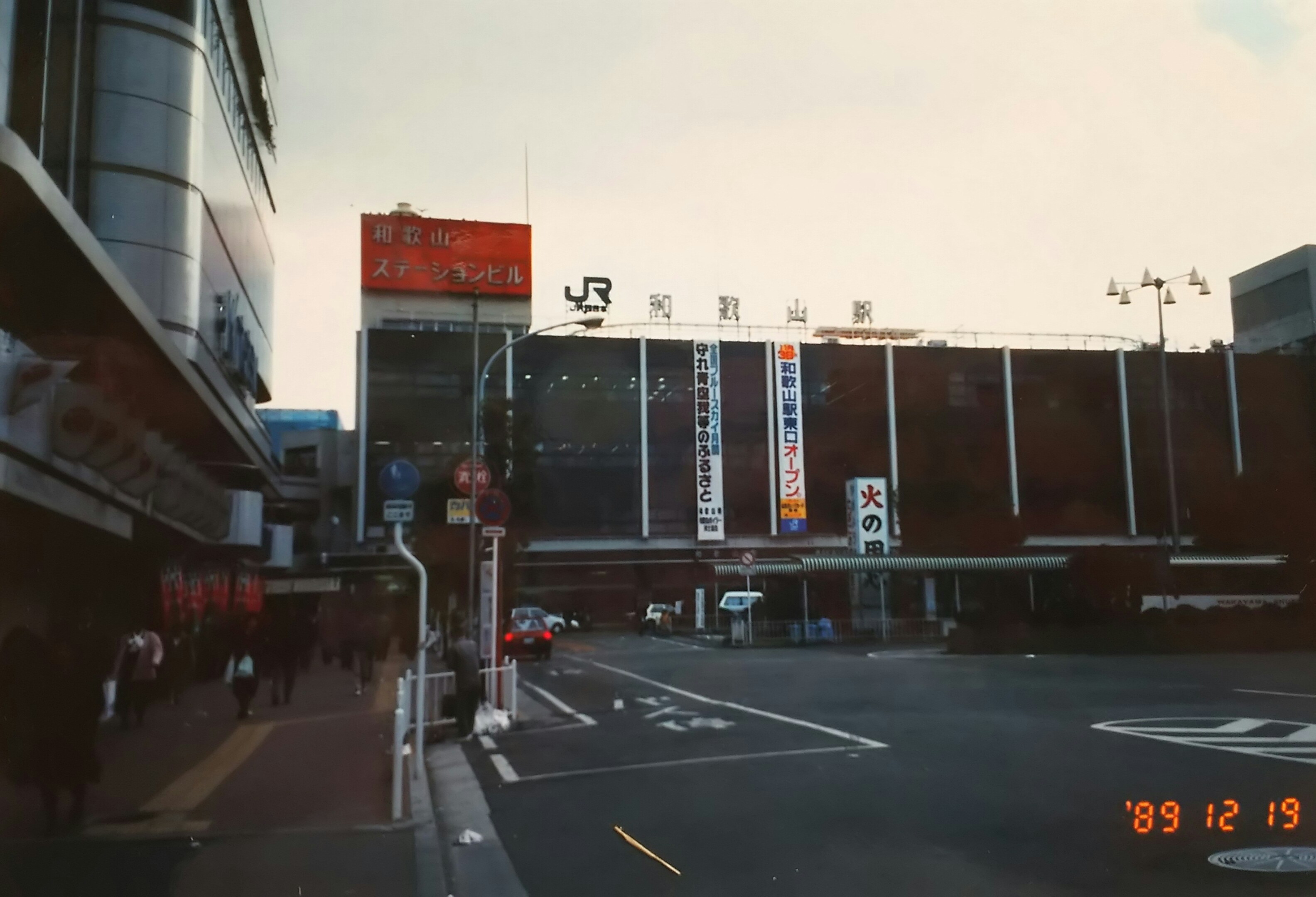
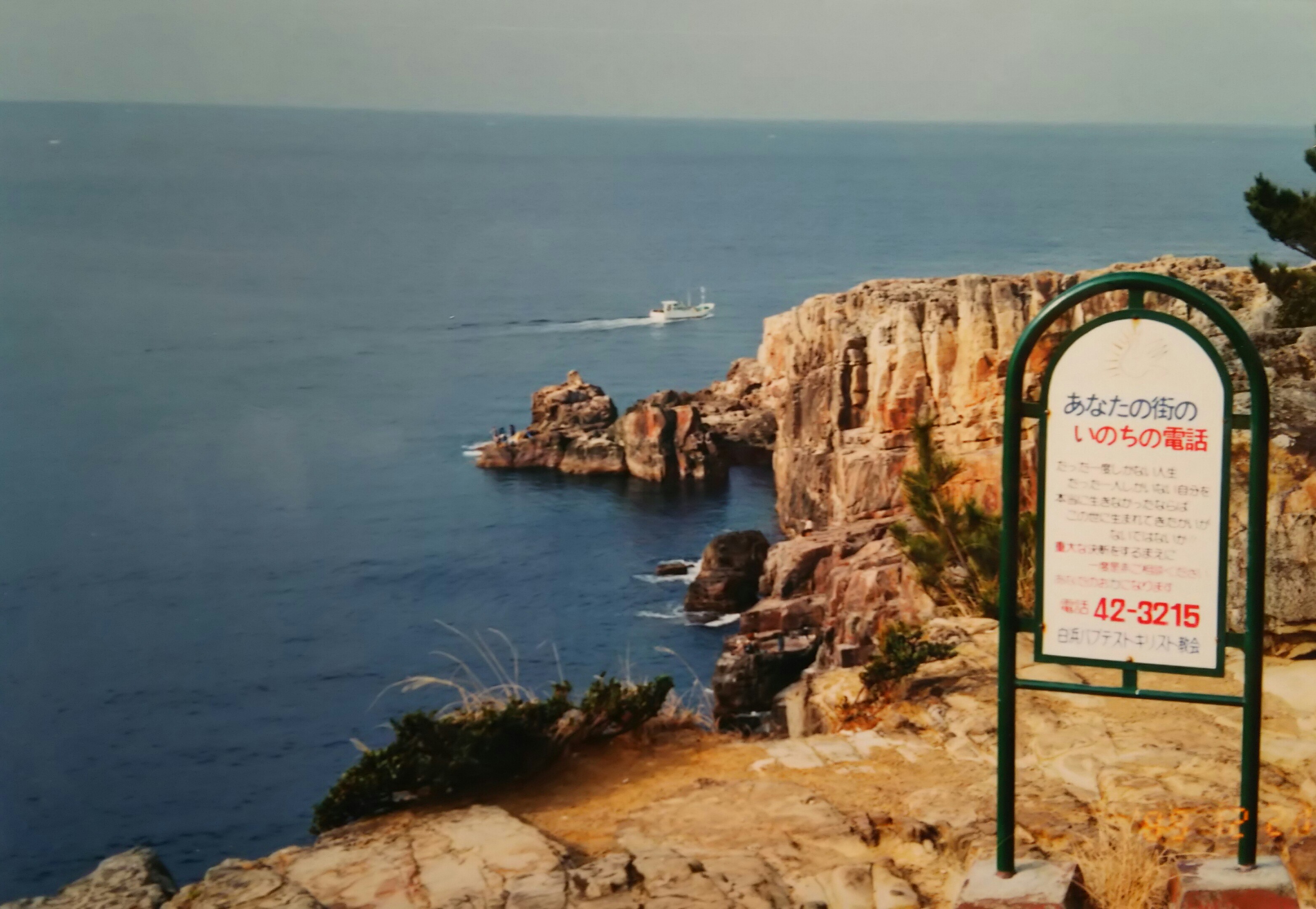
This photo is of Wakayama Station. Next is the “Sandanbeki” cliffs, located on the outskirts of Shirahama Onsen. These are columnar jointed rock walls standing 50 to 60 meters tall. There’s a sign for the Christian “Life Line” hotline, likely because people jump to their deaths here. I recalled seeing a similar sign at Tojinbo, another columnar jointed rock formation.
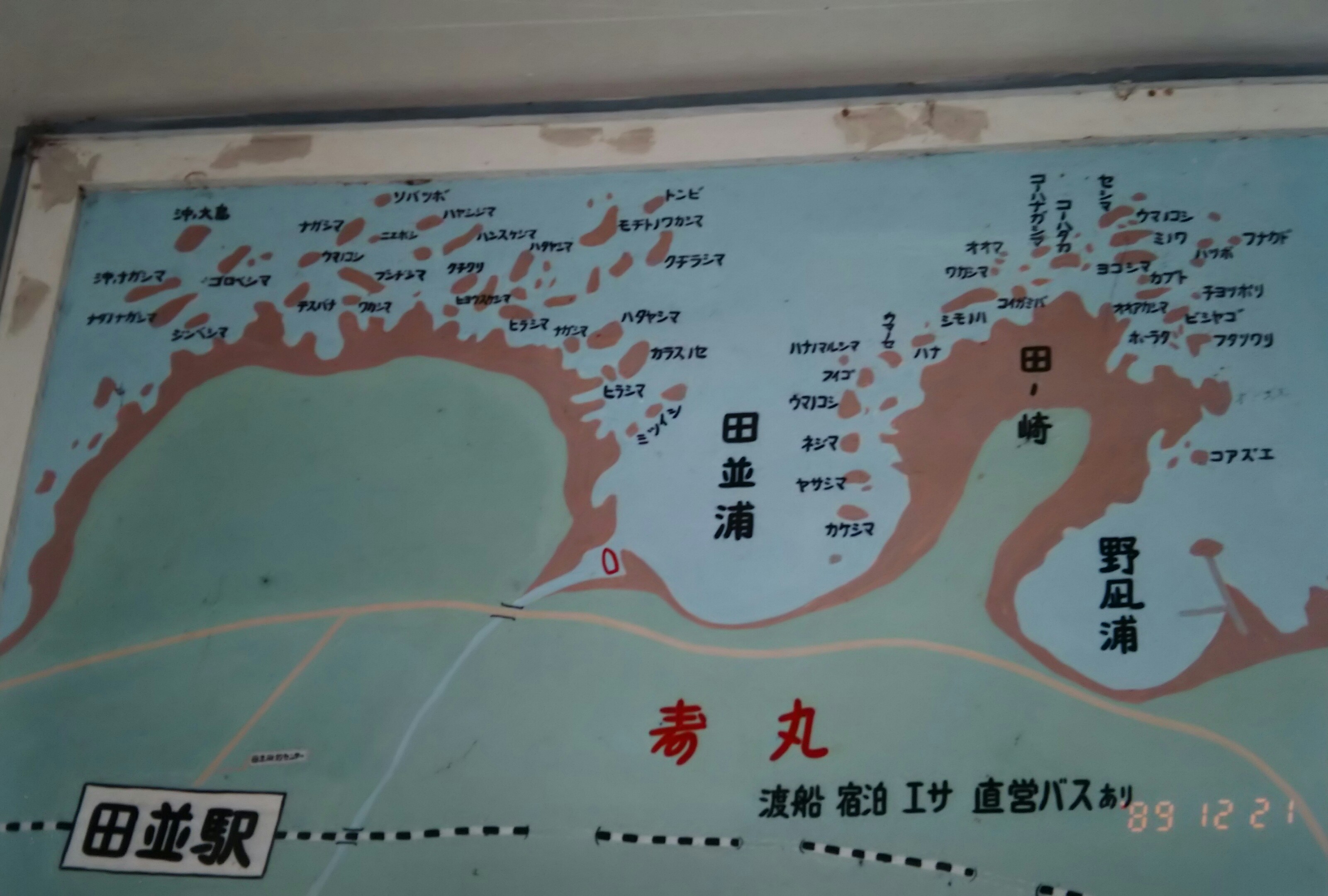
Finally, this is a map of the surrounding area displayed on the wall of the Tanami station building, just before Kushimoto. Surprisingly, each of the roughly 50 small islands is labeled with a name. Stations along the Kisei Main Line are unstaffed except for limited express stops. Due to the poor weather at the time, I stayed at these unstaffed stations night after night.
From Kushimoto, I drove along the “Shionomisaki Road” towards Shionomisaki, the southernmost point of Honshu.
写真は和歌山駅です。続いて白浜温泉の外れにある「三段壁」、高さ50~60mの柱状節理の岩壁です。投身自殺があるのか、キリスト教会の「いのちの電話」の立て札があります。同じ柱状節理の岩壁、東尋坊でも同様の立て札があったのを思い出しました。
最後は串本の手前、田並の駅舎の壁に掲げられていた周辺の案内図です。驚いたことに50ぼどの小さな島の一つ一つに名前が記されています。紀勢本線は特急の停車駅以外は無人駅です。この頃は天気がよくないこともあり、無人駅に連日泊まっていました。
串本から「潮岬道路」を走り、本州最南端「潮岬」へ向かいます。
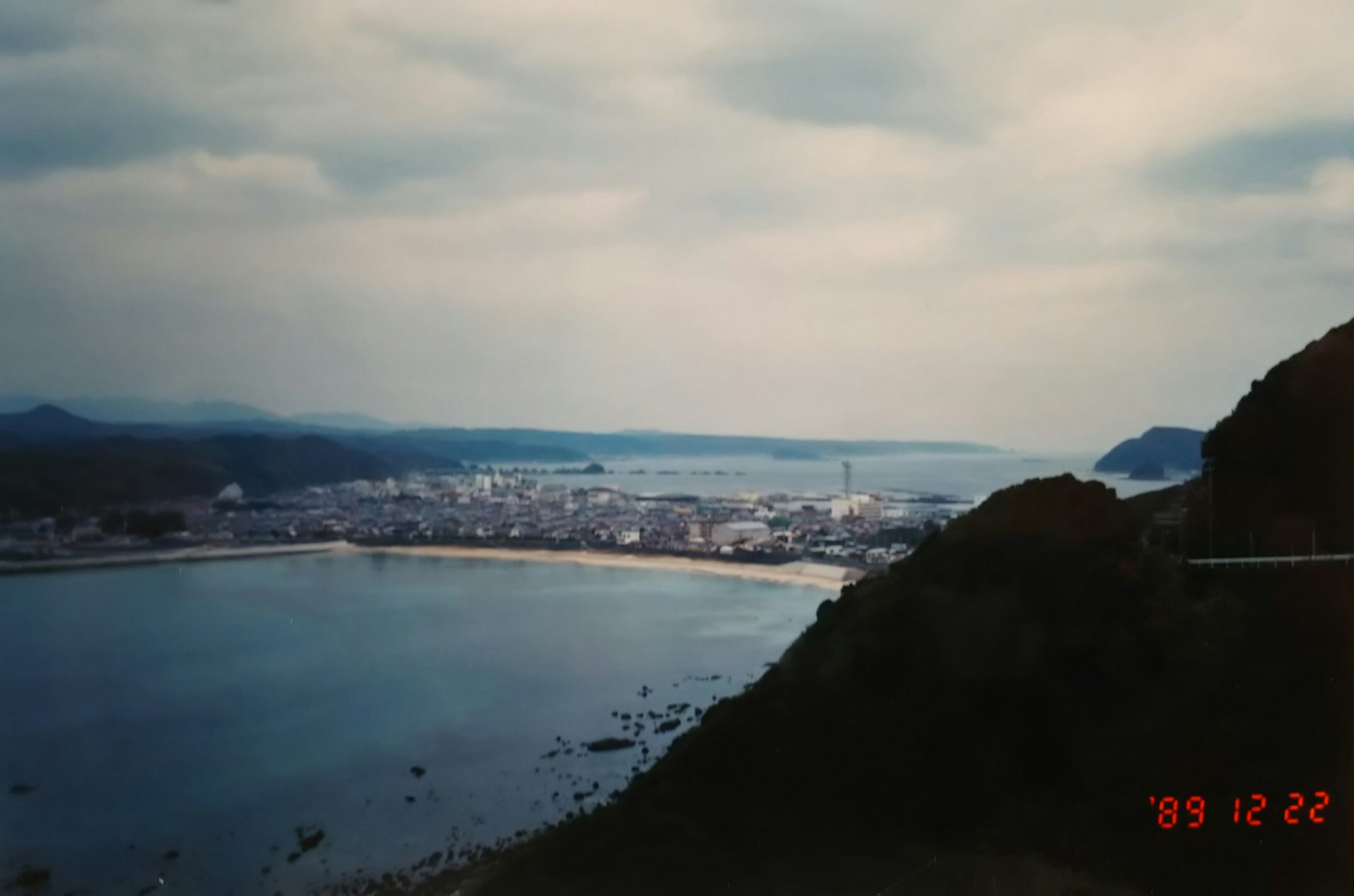
The photo shows Kushimoto Port taken from the Shionomisaki Road. The near side faces the Kii Channel, while the far side faces the Kumano Sea. From around here, the rias coastline continues towards Mie Prefecture.
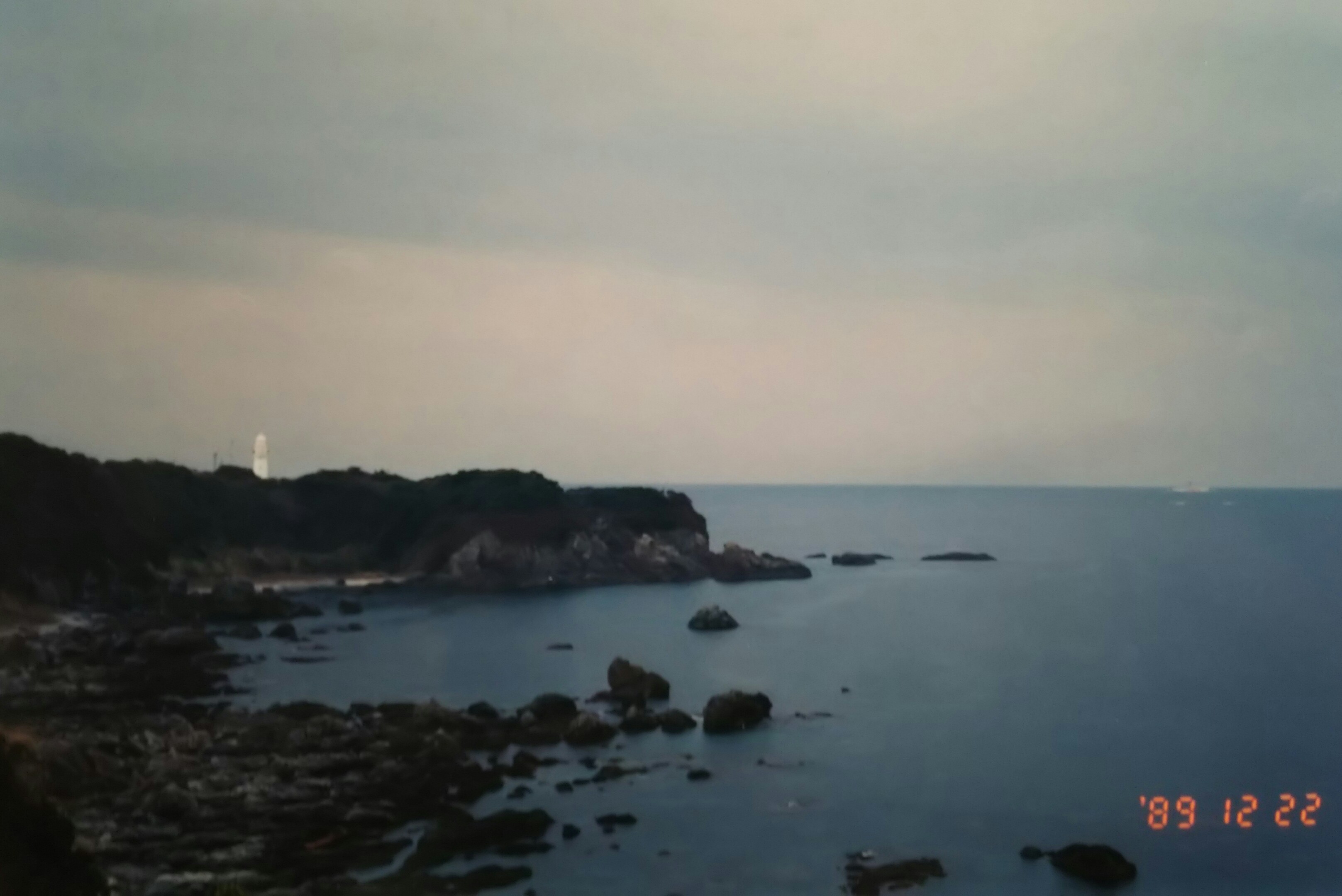
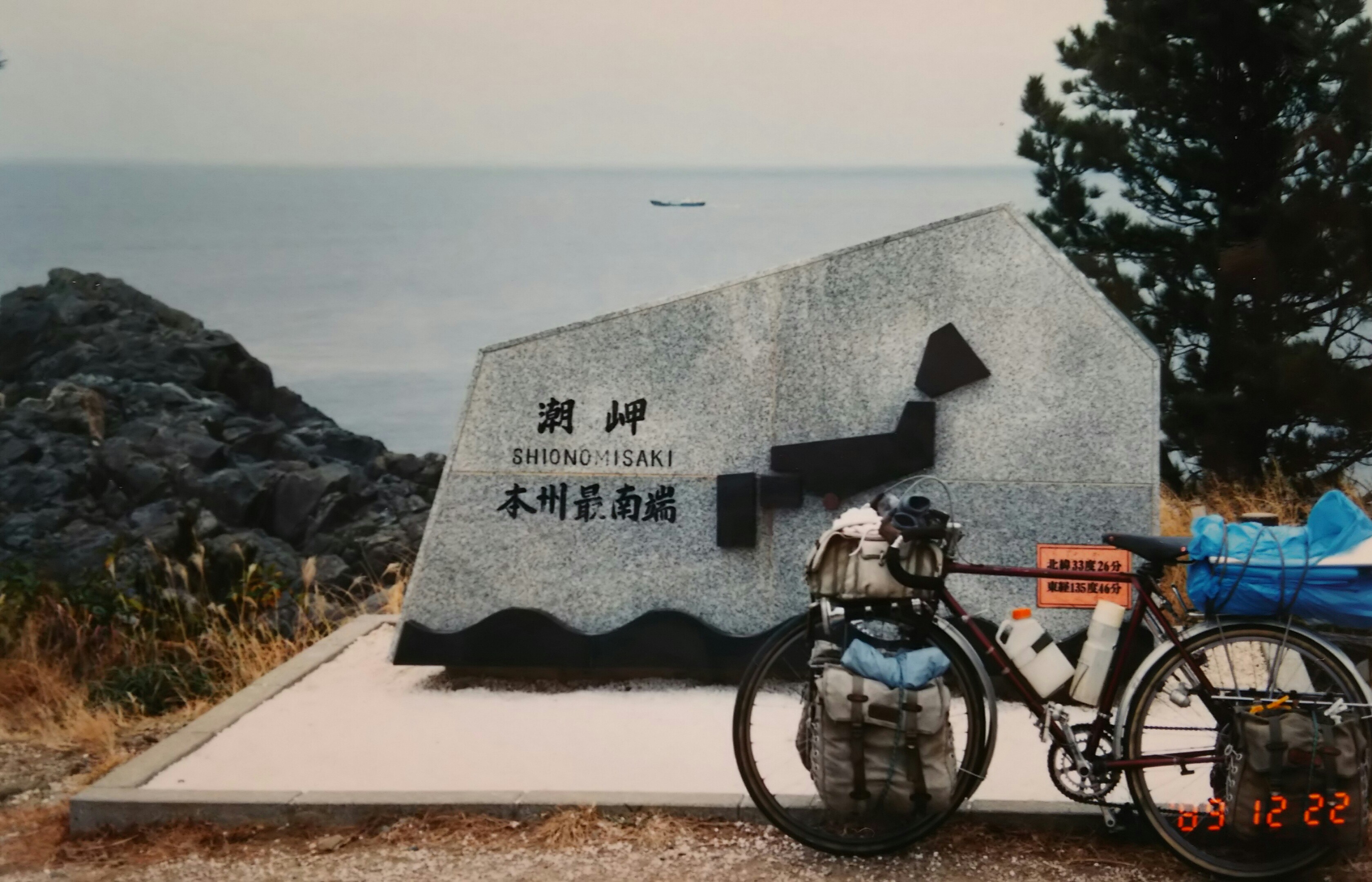
Next is the “Shiozaki Lighthouse,” built in 1873 (Meiji 6). And then, the southernmost point of Honshu, Cape Shiozaki. Standing before the Pacific Ocean, I truly felt (?) the Earth’s roundness.
Next time, I’ll drive from Nachi Falls to Ise Grand Shrine.
写真は潮岬道路から撮った串本港です。手前が紀伊水道側、向こうが熊野灘側になります。ここらあたりから三重県側へとリアス式海岸が続きます。
続いて1873年(明治6年)に建てられた「潮岬灯台」です。そして本州最南端の潮岬。太平洋を目の前にして地球が丸いのを実感(?)しました。
次回、那智の滝から伊勢神宮へと走ります。
 My Life with Bicycles