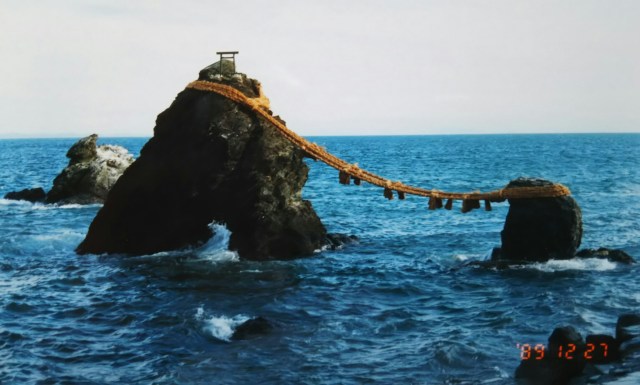
Before heading to Toba in the morning, I stopped by Futamiura’s famous “Meoto Iwa” (Couple Rocks). They were smaller than I’d imagined, which was a bit surprising.
Still, the “Akafuku” signs and pearl shops along the highway were very noticeable.
The Ise Bay Ferry took about an hour from Toba Port to Irago Port on the Atsumi Peninsula. Back in Aichi Prefecture again. Though I’d be entering Shizuoka Prefecture the next day.
The wind picked up strongly that afternoon, so I hurriedly sought shelter at a bus stop in Atsumi Town. Though called a bus stop, it was a small roofed shelter with transparent acrylic panels at the front for visibility. Perhaps this area is naturally windy, as the entrance was a sliding door. After letting the last bus pass, I pulled out my sleeping bag and lay down on the bench.
It was 11 PM. I turned off the radio, ready to sleep… Suddenly, the sound of the door opening. A male intruder. Even in the dim light, I could make out his appearance. Messy hair, unkempt beard – his appearance suggested he was homeless. He staggered over and sat down in the empty space at my feet. He seemed drunk. Soon, sniffling, he began to doze off, then collapsed from the bench, landing on the concrete floor. This time, he started snoring.
In the end, he didn’t wake up even by morning. I left at 7:00, sleep-deprived. Maybe the bus stop was his regular lodging, and I was the intruder.
朝、鳥羽へ向かう前に二見浦の名勝「夫婦岩」に寄ります。想像していた大きさと違い、小さいのに少々驚きです。
それにしても街道沿いに「赤福」の看板と真珠の販売店が目立ちます。
鳥羽港から渥美半島の伊良湖港まで「伊勢湾フェリー」で約1時間。再びの愛知県です。といっても翌日には静岡県に入ります。
この日は午後から風が強くなり、逃げるように渥美町内のバス停泊。バス停といっても屋根付きの小屋で、見透しが効くように前面は透明のアクリル板になっています。この地域はもともと風が強いのか出入り口は引き戸です。最終バスをやり過ごすと寝袋を取りだし長椅子に横になりました。
時刻は11時。ラジオのスイッチを切り、いざ寝るかと…… 突然戸を開ける音が、男性のちん入者です。薄暗い中でもようすはうかがえます。髪はボサボサ、髭は伸び放題、格好からするといわゆるホームレスです。彼は私の足元の空いてるスペースにヨロヨロしながら座り込みました。どうやら酔っぱらっているようです。やがて鼻をすすりながらウトウトし始めたかと思うと長椅子から崩れ落ち、コンクリートの床に横になったまま、今度はイビキをかき始めました。
結局、彼は朝になっても起きることなく、私は寝不足まま7時には出発しました。ひょっとしたらバス停は彼の定宿で、私の方がちん入者だったかもしれません。
Passing Toyohashi, I drive along National Route 150 from Hamamatsu to Shimizu along the coastline. I plan to stop at Shizuoka Station along the way to take photos. Route 150 along the Enshū-nada coast stretches flat, surrounded by fields of melons and watermelons. It’s a stark contrast to the Kii Peninsula, even though it’s the same coastline.
Passing the Hamaoka Nuclear Power Plant, I head for Omaezaki Lighthouse, built in the early Meiji era(1868-1911).
♪ “We lighthouse keepers on the cape, just my wife and me, watch the ships sailing offshore…”
This is the theme song from the movie “Joy and Sorrow Through the Years,” a hit when I was in elementary school. Omaezaki Lighthouse served as the setting for that film. Later, “Joy and Sorrow Through the Years” was adapted into a TV drama series. It was also remade into a movie just three years ago, in 1986.
That night, we camped in tents facing Omaezaki Port.
豊橋を過ぎ、浜松から国道150号線で海岸線を清水まで走ります。途中、写真を撮るため静岡駅に寄るつもりです。遠州灘沿いの150号線は平坦な道が続き、あたりにメロンやスイカの畑が広がっています。同じ海岸線でも紀伊半島とはえらい違いです。
浜岡原発を横目に明治の初めに建てられた「御前埼(おまえさき)灯台」へ。
♪「俺ら 岬の 灯台守りは 妻と二人で 沖行く船の …… 」
私が小学生の頃にヒットした、映画「喜びも悲しみも幾歳月」の主題歌です。御前埼灯台はその映画の舞台となっています。その後「喜びも悲しみも幾歳月」は連続ドラマとしてテレビ放送されます。また、この3年前の1986年には映画でリメイクされてもいます。
この日は御前崎(おまえざき)港を前にテント泊。
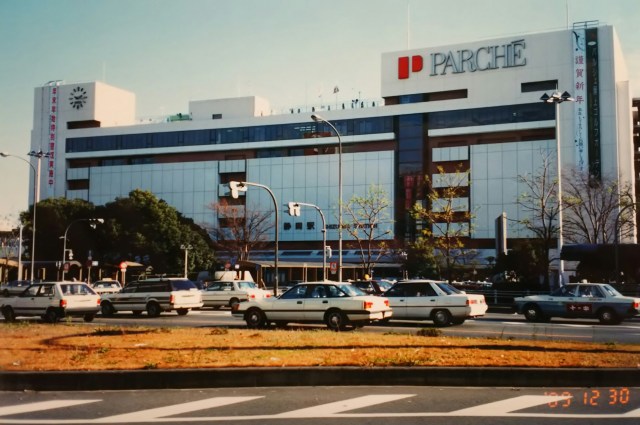
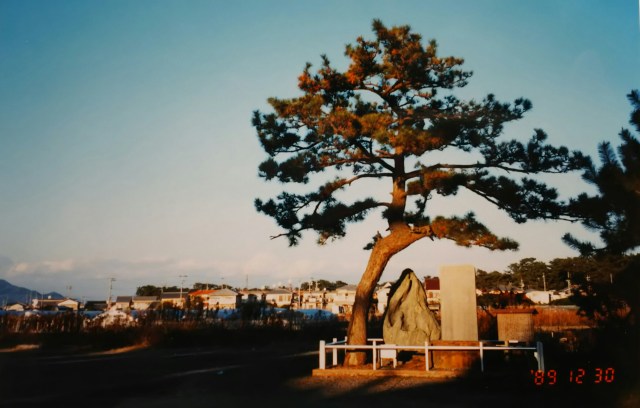
After taking photos at Shizuoka Station, I returned to Route 150 and headed for Miho no Matsubara, a pine grove said to contain some 50,000 trees. The view of Mount Fuji from Miho no Matsubara is picturesque, but alas, the mountain was hidden in clouds. So instead, I captured the “Hagoromo Pine” illuminated by the setting sun.
The legend of the Hagoromo Pine tells of a celestial maiden who descended from the heavens and hung her feathered robe on a pine tree as a landmark. This maiden is said to be Mihotsuhime-no-Mikoto, the consort of Ōkuninushi-no-Mikoto, and she is enshrined at the nearby Miho Shrine. The Hagoromo Pine in the photo is the second generation; the original was buried during Mount Fuji’s “Hoei Eruption.” Later, this second-generation pine also began to die back, and now a nearby pine tree has taken its place as the third-generation “Hagoromo Pine.”
From Miho no Matsubara to Shimizu, it’s been a while since my last sauna stay. After a quick soak, I headed out into the night for a drink.
Finally, New Year’s Eve. With the good weather, I headed towards West Izu while taking photos of Mount Fuji. I’ll be circling the Izu Peninsula for the final leg of my journey around Japan.
静岡駅の写真を撮ると再び150号線に戻り、その数5万本ともいわれる松並木「三保の松原」へ。三保の松原から望む富士山は絵になりますが、あいくに富士山は雲の中。それならば夕日に照らされた「羽衣の松」を写真に収めます。
「羽衣の松」とは空から舞い降りた天女が目印として羽衣を松にかけたという伝説です。その天女とは大国主命の后(きさき)、三穂津姫命とされ、近くの御穂神社の祭神となっています。写真の羽衣の松は二代目、初代は富士山の「宝永大噴火」で埋もれてしまったとのことです。その後、この二代目の松も立ち枯れが始まり、今はこの近くの松が三代目「羽衣の松」を継いでいるそうです。
三保の松原から清水へ、久しぶりのサウナ泊です。ひとっ風呂浴び、一杯飲みに夜の街へ出ました。
いよいよ大晦日です。天気がよいこともあり、富士山の写真を撮りながら西伊豆へ。日本一周の最後に伊豆半島を回ります。
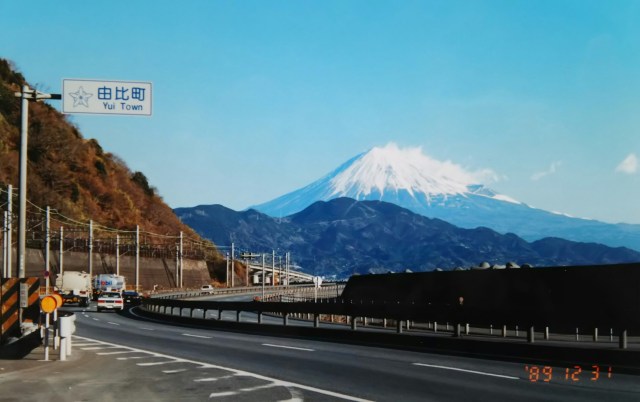

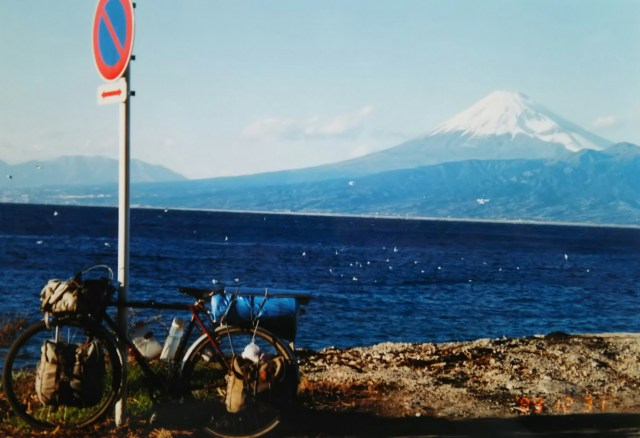
First, Mount Fuji seen from National Route 1. Next, Mount Fuji across the Fuji River. Finally, Mount Fuji from northern West Izu.
Along Suruga Bay to Heda in the northern part of the peninsula. Heda was still just a village back then. Moreover, its hot springs had only started flowing three years prior, in 1986 (Showa 61), making it a small port town hardly worthy of being called a tourist destination.
First, we headed to the newly emerged hot springs (300 yen). After feeling refreshed, we pitched our tent on the concrete of Heda Fishing Port.
Preparing a late dinner, the radio began broadcasting NHK’s “Kōhaku Uta Gassen.” The voices of Pink Lady and The Tigers, reunited just for this day, filled the air.
The familiar voice of announcer Matsudaira hosted. Takeda Tetsuya led the White Team, but who was leading the Red Team? Mid-broadcast, it became clear: Mita Yoshiko. A special tribute to Misora Hibari, who had passed away that June, also began.
Toda Fishing Port felt especially bright with the lights of the fishing boats. I heard that from New Year’s Eve night until New Year’s Day, the boats keep their engines running, illuminating the entire harbor with their lights. The sound of the waves, the singing from the radio, and the hum of the boat engines. After the Red and White ends, we’ll eat our New Year’s Eve soba.
The dawn of New Year’s Day, Heisei 2 (1990), brought clear skies. I drove again that day, taking photos of Mount Fuji along the way.
最初は国道1号線から見た富士山。続いて富士川越しの富士山。最後は西伊豆北部からの富士山です。
駿河湾沿いを半島北部の戸田(へだ)へ。戸田は当時まだ村でした。しかも温泉が湧いたのもこの3年前の1986年(昭和61年)と新しく、観光地とはいい難い小さな港町でした。
ひとまずやっと涌き出た温泉へ(300円)。サッパリした後は戸田漁港のコンクリートの上にテントを張ります。
遅めの夕飯の準備、ラジオでは NHK「紅白歌合戦」が始まりました。この日のためだけに再結成されたピンクレディーとザ・タイガースの歌声が流れています。
司会は聞き覚えのある松平アナウンサー、そして白組は武田鉄矢、紅組は誰でしょうか、放送途中で三田佳子とわかります。この年の6月に亡くなった美空ひばりの特集も始まりました。
戸田の漁港は漁船の灯りでひときわ明るく感じられます。大晦日の夜から元旦まで船のエンジンをかけっぱなしで港全体を漁船の灯りで明るくするそうです。波の音とラジオから流れる歌声、そして船のエンジン音。紅白が終わったら年越しそばを食べます。
明けて平成二年の元旦、上天気です。この日も富士山の写真を撮りながら走ります。
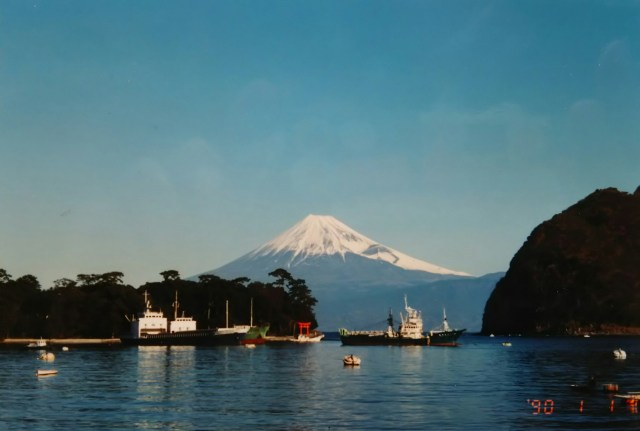
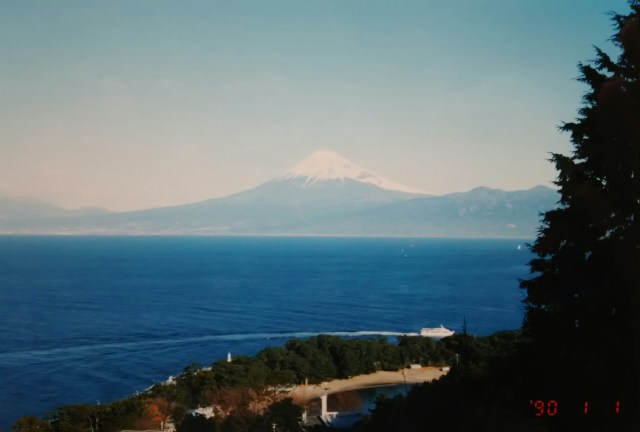
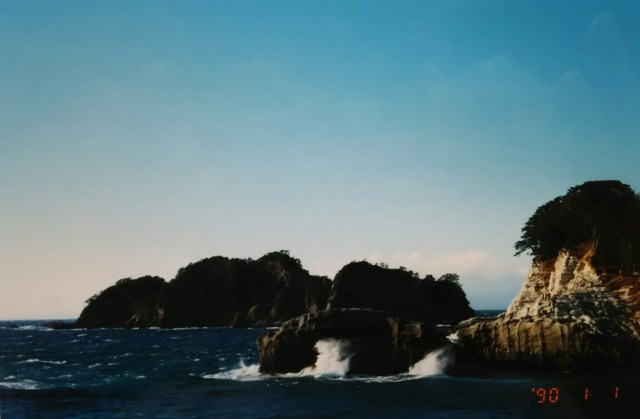
The first photo shows Mount Fuji from Toda Fishing Port. Next is Mount Fuji from around Kamo Village (now Nishiizu Town), a bit further south. And then “Dogashima.”
Even though it was New Year’s Day, there were quite a few cars passing by. Judging by the license plates, many seemed to be from the Tokyo metropolitan area.
Wanting to drive leisurely, plus the many ups and downs, the day’s mileage didn’t even reach 60 kilometers. Tent camping on the beach at Koura.
From Irozaki, the southernmost point of the Izu Peninsula, to East Izu. National Route 136 changes to Route 135 after passing Shimoda. Traffic became even heavier than in West Izu. This is probably typical for tourist spots during the New Year holidays.
最初の写真は戸田漁港からの富士山。続いて少し南の賀茂村(現 西伊豆町)あたりからの富士山です。そして「堂ヶ島」です。
元日だというのに行き交う車が少なくありません。ナンバーを見ると首都圏からの車が多いようです。ノンビリ走りたい上にアップ・ダウンも多く、この日の走行距離は60キロに届きませんでした。子浦の浜辺でテント泊です。
伊豆半島最南端、石廊崎から東伊豆へ。国道136号線は下田を過ぎると135号線に変わります。西伊豆にもまして車の往来が激しくなってきました。正月休みの観光地はこんなもんかもしれません。
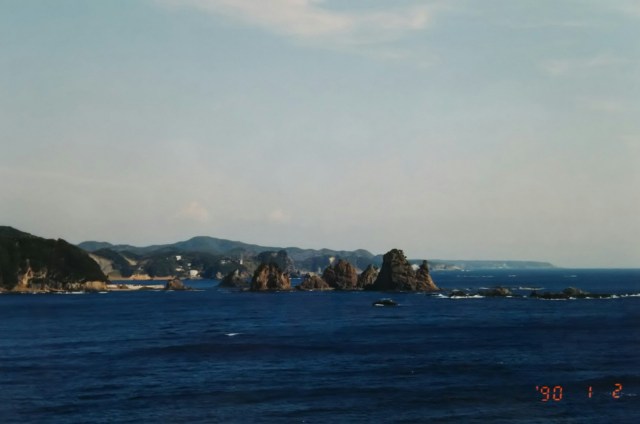
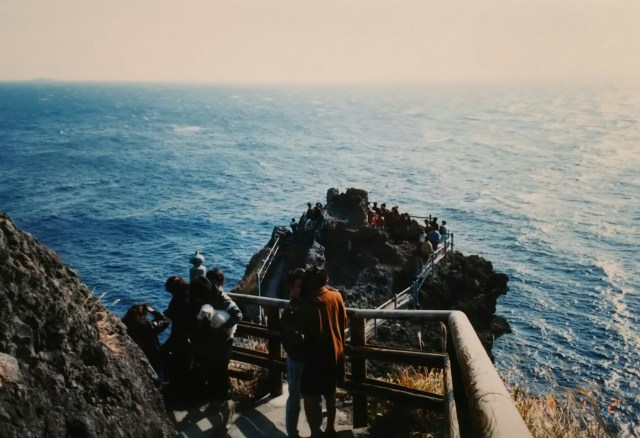
The photos are from the Irozaki area. Continuing along the promenade beside Irozaki Lighthouse brings you to the very tip of Irozaki, where the Pacific Ocean looms below. It was the second day of the New Year, and quite a crowd had gathered.
That day, I rode all the way to Atagawa but couldn’t find a suitable camping spot, so I turned back to Katase-Shirata, one stop earlier, and camped in my tent. The distance covered was just over 50 kilometers.
The next day, New Year’s Day 3, I headed straight home to Tokyo without stopping anywhere. I arrived at night, but since I made it back within the first three days of the New Year, I’ll call it good.
Next time, I’ll look back on my “Bicycle Tour Around Japan” for the final time.
写真は石廊崎周辺です。石廊崎灯台の横の遊歩道をさらに進むと眼下に太平洋が迫る石廊崎の突端に出ます。正月二日、結構な人出です。
この日は熱川まで走ったものの適当な野営地が見つからず、一つ手前の片瀬白田まで戻ってテント泊。走行距離は50キロちょい。
翌、正月三日は「里ごごろ、まっしぐら」どこにも寄らずに一気に東京の自宅まで走りました。夜着となりましたが、三が日の内に帰れたのでヨシとします。
次回、最後に「日本一周自転車旅」を振り返ります。
 My Life with Bicycles