About 30 kilometers from Izumo, I part ways with Route 9 in Oda and head inland on National Route 375, aiming for Hiroshima via Miyoshi. After crossing a mountain, you reach Kasubuchi in Ochi Town, where you encounter the Gōno River and the JR Sango Line. The Gōno River makes a large bend here at Kasubuchi, flowing towards Gozu on the Sea of Japan side. The Sango Line connects Gozu with Miyoshi. Ochi Town is now Misato Town.
The flow of the Gōno River is surprisingly gentle for its volume, making Route 375 along its banks feel remarkably flat. However, despite being a national highway, many sections are single-lane, requiring caution when passing large vehicles. Winding right and left around the river and railroad tracks, I reached the point 5 kilometers before Miyoshi. My distance traveled that day totaled about 120 kilometers.
出雲から30キロほど、大田(おおだ)で9号線と別れて国道375号線を内陸へ、三次(みよし)経由で広島を目指します。ひと山越えると、邑智(おおち)町粕淵(かすぶち)で江(ごう)の川と JR 三江(さんごう)線に出会います。江の川はここ粕淵で大きく曲がり、日本海側の江津(ごうつ)へと注いで行きます。三江線はその江津と三次を結んでいます。邑智町は現在の美郷町です。
江の川の流れは水量に比して緩く、川沿いを行く375号線も平坦に感じるほどです。ただし国道とはいうものの一車線の区間が多く、大型車とのスレ違いには注意が必要です。川と鉄路を右に左にと三次の手前5キロ、この日の走行距離は120キロほどになりました。
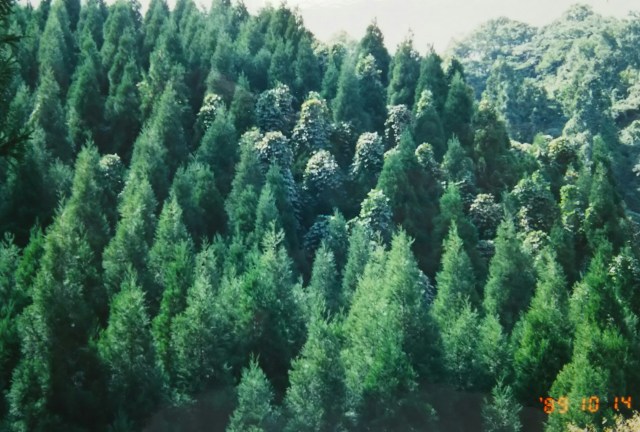
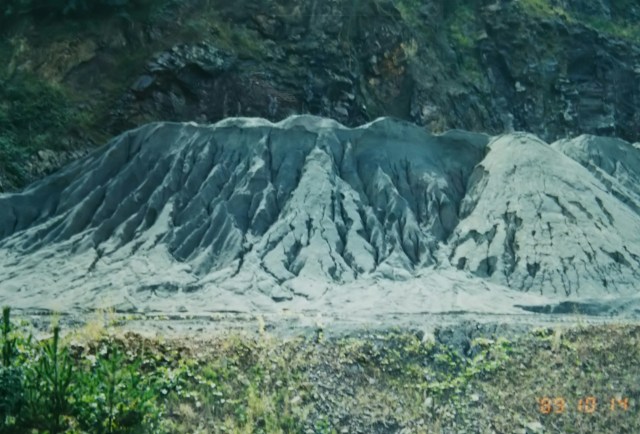
Ochi Town, followed by Daiwa Town, seem to have thriving forestry industries. At the tips, yellowish masses resembling pollen are visible. The male flowers of cedar trees mature from summer to autumn, dry out during winter, and then suddenly turn into pollen and disperse in early spring. Next is an object (?) of sand dunes created by pouring rain. A snapshot along the way.
About 80 kilometers from Miyoshi to Hiroshima. Midway, I part ways with the Gōno River and continue onward to the Kamine Pass, a watershed at a mere 267 meters elevation. One side flows north to the Eno River and into the Sea of Japan; the other flows south to the Ota River, which runs through Hiroshima City and empties into the Seto Inland Sea.
Arriving in Hiroshima near 2:00 PM, I head to the Hiroshima Peace Memorial Museum within the Peace Memorial Park.
The library at my elementary school had a photo album of the atomic bomb. There was a section for non-circulating books, and I wondered, “What kind of books are in there?” Among them, I happened to pick one up. I forget the title, but it was a large-format book with a sturdy binding.
A sea of scorched earth, charred corpses on the roadside so blackened you couldn’t tell men from women, piles of bodies stacked high, a boy my age—or rather, a child—with severe burns across his upper body, close-ups of faces scarred with keloid marks… I remember my heart pounding relentlessly for a long time afterward, the shock overwhelming me as I turned page after page.
邑智町、続いて大和(だいわ)町と林業が盛んなようです。先端に花粉らしき黄色がかった塊が見えます。杉の雄花は夏から秋にかけて成熟し、冬の間に乾燥して春先に一気に花粉となって拡散します。次は降り注ぐ雨が造った砂山のオブジェ(?)。道中のスナップです。
三次から広島まで80キロほど、行程半ばで江の川と別れ、さらに進むとわずか標高267mの分水嶺、上根峠です。片や北へ流れ江の川から日本海へ、片や南へ広島市内を流れる太田川から瀬戸内海へと注ぎます。
午後2時近くに広島に到着。「平和記念公園」内の「原爆資料館(広島平和記念資料館)」に行きます。
私の通った小学校の図書室には原爆の写真集が置かれていました。貸出禁止本のコーナーがあり「どんな本があるんだろう?」そんな中、偶然手にしたのです。タイトルは忘れましたがガッチリとした装丁の大判サイズの本です。
一面の焼け野原、道端には男女の区別もつかない黒焦げの死体、さらにはそれらが積み上げられた山、上半身に大きく火傷を負った同世代の少年というか子供、ケロイド痕が残る顔のアップも……。次から次へとあまりのショックで心臓がいつまでもドキドキしていたのを覚えています。

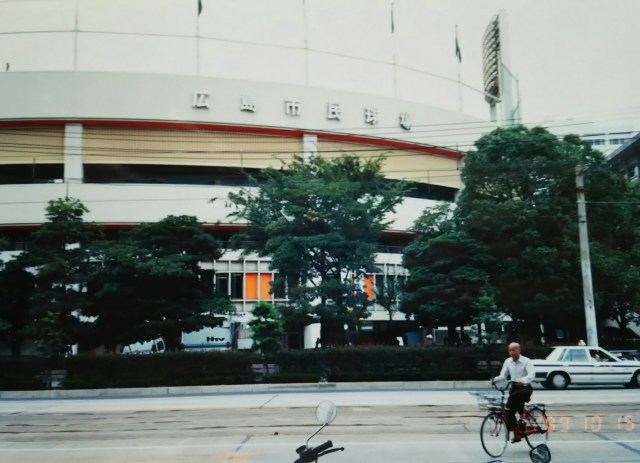
Hiroshima Station and Hiroshima Municipal Stadium, home of the Red Helmets. It has since relocated near the station and is now known as Hiroshima Stadium.
広島駅と赤ヘル軍団の本拠地「広島市民球場」です。現在は広島スタジアムとして駅の近くに移転しています。
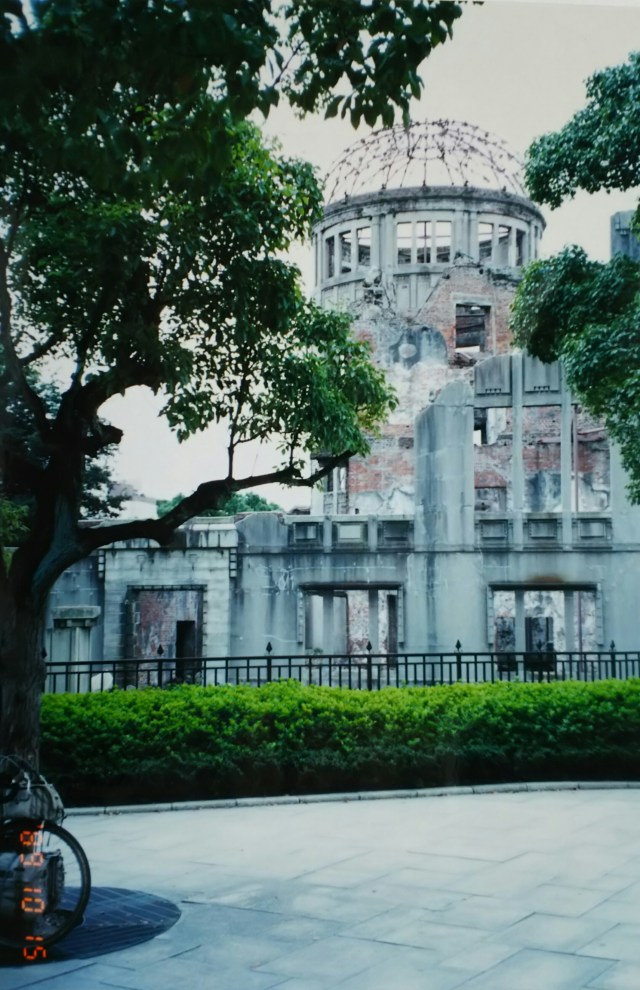
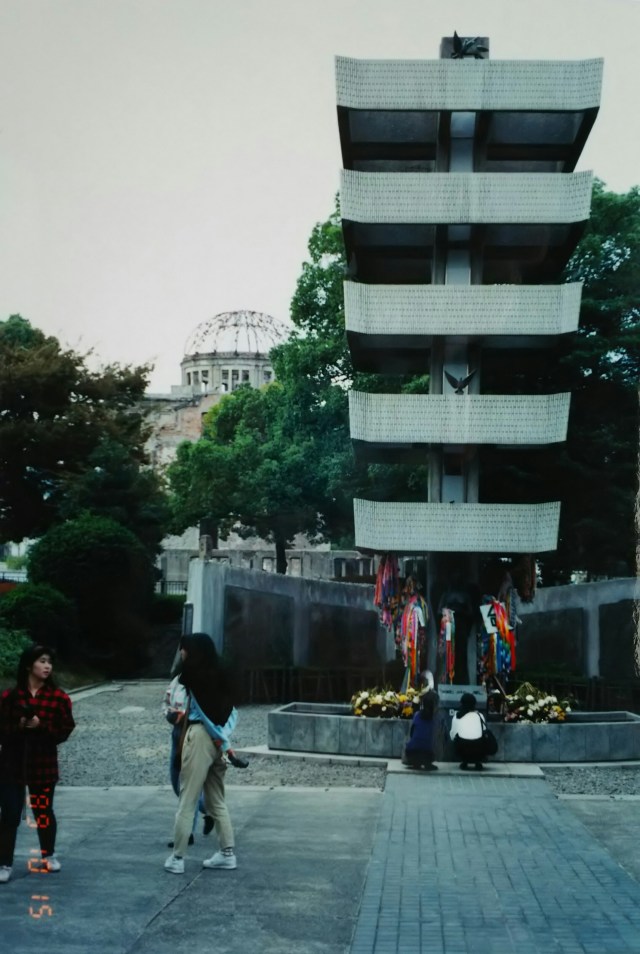
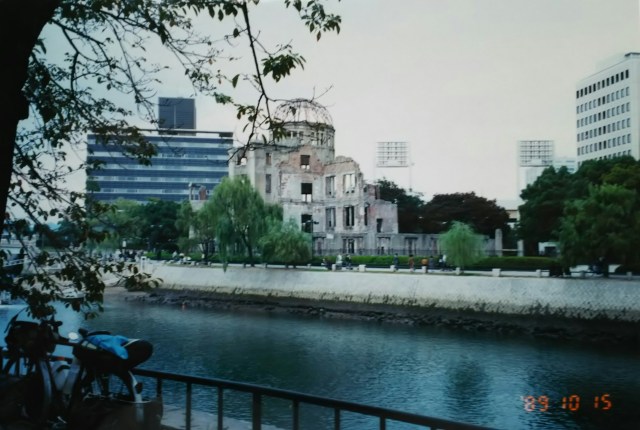

Across the street from Hiroshima Municipal Stadium stands the Prefectural Industrial Promotion Hall, known as the Atomic Bomb Dome. The Atomic Bomb Dome was registered as a World Heritage Site in 1996 as a structure damaged by the atomic bomb. Nearby is the Memorial Tower for Mobilized Students, with its five-story pagoda-like form.
The year before the atomic bomb was dropped, the Student Labor Service Law was enacted, making labor compulsory for students from junior high school age and above. On the morning of August 6th, the day the atomic bomb was dropped, over 8,000 students were working in the city to demolish houses as part of the “house clearance” operation. This was a planned demolition effort to prevent the spread of fires caused by the US air raids, essentially a thinning operation. During this work, they were exposed to the bomb, resulting in the tragic loss of 6,300 lives.
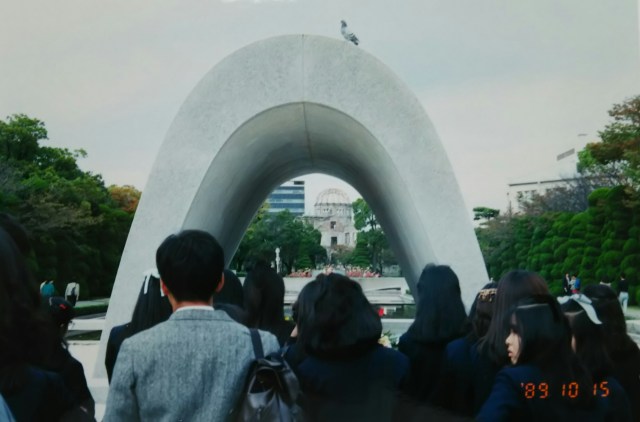
Next is the Atomic Bomb Dome as seen from the opposite bank. Following that is the “Memorial Monument for the A-bomb Victims.” Is that an arch for rain protection? The memorial monument is inside it, but it’s hidden from view along with the flower offering stand in front, obscured by people. Standing in front, you can see the Atomic Bomb Dome beyond the arch. Other memorial monuments and peace-dedicated monuments are scattered throughout the spacious grounds.
The last photo was taken with the Peace Memorial Museum (Hiroshima Peace Memorial Museum) in the background. To the right is the museum’s annex, the East Building. The Atomic Bomb Dome on the opposite bank to the north is also part of the Peace Memorial Park.
What surprised me at the museum were the leaflets dropped by the U.S. military. They contained messages like: “We have developed a new type of bomb. Cease armed resistance. Evacuate the cities.” The leaflet’s title was “To the Japanese People!! Evacuate the Cities Immediately.” They also mentioned the responsibility of the military clique for worsening the war situation and urged the Emperor to petition for the war’s end.
During the war, intercepting radio transmissions was prohibited. Similarly, people were obligated to promptly report any leaflets they found to the police or authorities without reading their contents. Violators faced fines or imprisonment. Starting about six months before the atomic bombings, large quantities of leaflets were dropped by U.S. military aircraft across Japan. Soon, air raids began occurring as the leaflets had warned. Records show leaflets were also dropped on cities surrounding Hiroshima, such as Kure and Fukuyama, in late July, the month before the bombings.
Leaflets dropped on Nagasaki, Fukuoka, Osaka, and Tokyo mentioned the atomic bombing of Hiroshima. The leaflet I saw at the Hiroshima museum might have been one of those. For a time, the timing of the leaflets dropped over Nagasaki—before or after the bombing—was a point of interest. U.S. military records later confirmed they were dropped from the evening of the 9th, the day of the bombing, into the morning of the 10th. After this, I also visited the Nagasaki Atomic Bomb Museum.
Hiroshima, the largest city in the Chugoku region, opened up on the alluvial fan of the Ota River. Office districts and commercial areas spread out in a balanced manner between the six rivers branching off from the Ota. Heading east from Peace Park leads to Hiroshima’s busiest entertainment district. Leaving the museum, I thought, “Tonight, I’ll have a drink and stay at some cheap lodging.”
As dusk fell, I had dinner and a drink at an affordable izakaya. My lodging was a capsule hotel with a sauna (¥3,200 per night). I parked my precious bicycle out of sight near the back entrance. But the next morning… there was vomit on that bicycle. What the hell?!
Next time, I head from Miyajima in Aki to the Kintaikyo Bridge in Iwakuni, Yamaguchi Prefecture.
広島市民球場と道をへだてて隣接しているのが県産業奨励館「原爆ドーム」です。原爆ドームは1996年に被爆建造物として世界遺産に登録されています。近くにあるのが五重塔のようなフォルムの「動員学徒慰霊塔」です。
原爆投下の前年、学徒勤労令が施行され中学生以上の勤労が義務づけられます。8月6日の原爆投下の当日の朝も市内で8,000人以上の学生が米軍の空襲による出火延焼を軽減するための家屋の疎開作業を行っていました。家屋の疎開とは火事の広がりを防ぐために計画的に家屋を取り壊す、いわば間引き作業です。その作業中に被爆し、6,300人もの犠牲者が出ました。
次は対岸から見た原爆ドームです。続いて「原爆死没者慰霊碑」です。雨よけ用のアーチでしょうか、その内に慰霊碑があるのですが、手前の献花台ともども人影に隠れて見えません。前に立つとアーチの先に原爆ドームが見えるようになっています。広い園内には他にも慰霊碑や平和を祈念するモニュメントが点在しています。最後の写真は原爆資料館を背にして撮りました。右手に資料館の別棟、東館があります。北に位置する対岸の原爆ドームも平和記念公園になっています。
資料館で驚いたのは米軍が撒いたビラです。「我々は新型爆弾を開発した。武力抵抗を中止せよ。都市から避難するように」などの内容です。ビラのタイトルは「日本国民に告ぐ!! 即刻都市より退避せよ」です。戦況を悪化させた軍閥の責任や天皇陛下に戦争の終結を請願するようにも記されています。
戦時中、無線を傍受することは禁止されていました。同様に撒かれたビラはその内容を見ることなく警察などに速やかに届けるよう義務づけられていました。違反者には罰金もしくは禁固が課せられたのです。原爆投下の半年前から全国各地に大量のビラが米軍機から撒かれるようになります。やがてビラの予告通りに空襲されるようになっていきます。原爆投下の前月の7月末にも呉や福山など広島の周辺都市にビラが撒かれた記録があります。
長崎を始め福岡、大阪、東京に撒かれたビラには広島への原爆投下の記述があります。私が広島の資料館で見たビラはそれだったかもしれません。一時、長崎で撒かれたビラは原爆投下の前か後かで注目されましたが、米軍の資料で原爆投下の当日9日夜から翌10日の朝にかけて撒かれたと判明しています。この後、私は長崎の原爆資料館も訪れています。
中国地方最大の街、広島は太田川の扇状地に開けました。太田川から枝分かれした6本の川の間にオフィス街や商業地区がバランスよく広がっています。平和公園から東へ行くと広島一の繁華街、歓楽街に出ます。資料館を後に「今夜は一杯飲んで、安宿にでも泊まるか」そんな気持ちでいました。
日も暮れ、手頃な居酒屋で夕食も兼ねて一杯。宿はサウナ付きのカプセルホテル(一泊3,200円)です。大事な自転車は入り口奥の人目につかない場所へ、ところが翌朝その自転車にゲロが……。ナンテコッタイ?!。
次回、「安芸の宮島」から山口県岩国の「錦帯橋」へ向かいます。
 My Life with Bicycles