Crossing the Kiso River from Nagoya into Mie Prefecture. I rode National Route 1 through Yokkaichi and Kameyama, then took Route 25 to Iga-Ueno. Next, I headed toward Nara on Route 163, which runs parallel to the Kansai Main Line.
Most vehicles heading toward Osaka use the Meihan National Highway, the bypass of Route 25. I’d love to say “Route 163 with its light traffic makes for truly comfortable riding,” but here, when I push down on the pedals, the chain frequently skips and slips. When this happens, it’s time to replace the gears and chain. That night, I camped by the Kizu River.
What I needed to do in Nara was bike maintenance—specifically, replacing parts. Born in Tokyo, both my junior high and high school field trips were to Kyoto and Nara. For my high school trip, we had free time to choose from multiple destinations, and I picked Kyoto and Nara again. So, visiting famous sites and historic spots felt like something I could put off, or even skip.
I found a shop, talked with the owner, and decided to reset the entire drivetrain since I was only halfway through my Japan tour. I replaced the center front chainring (out of three), the rear 6-speed freewheel, the chain, and both front and rear tires with new ones. Both riding and shifting are now smooth and comfortable.
Next up was finding a spot to camp. My first destination was Nara Park. It was filled with many school trip students and the ever-friendly deer. These deer, beloved and protected by citizens as messengers of the gods, were reportedly hunted for food during wartime, causing their numbers to plummet drastically. It was a case of “necessity knows no law.”
Before I knew it, I had walked from Mount Wakakusa all the way to Kasuga Grand Shrine. While the park is open 24 hours, it didn’t feel like the kind of place to pitch a tent.
名古屋から木曽川を渡り三重県へ。国道1号線を四日市、亀山へと走り、25号線で伊賀上野へ。続いて関西本線と並行する163号線で奈良へと向かいます。
大阪方面へ向かう車のほとんどが25号線バイパスの名阪国道を利用します。「交通量の少ない163号線は実に快適な走りです」といいたいところですが、ここに来てペダルを踏み込むと頻繁に歯飛び、スリップするようになってきました。こうなるとギアとチェーンの交換が必要です。この日は木津川の川辺でテント泊。
奈良でやるべきことは自転車の整備、つまりパーツの交換です。東京生まれの私は中学、高校ともに修学旅行は京都・奈良。高校の修学旅行でも複数の旅行先から自由行動ということで、もう一度京都・奈良を選択していました。そんなわけで名所・旧跡巡りは、後回しというか「しなくてもいいや」ぐらいに思っていました。
ショップを探して店主と相談、日本一周もまだ半分、この先を考えて足周りを全てリセットすることに。フロントギア3枚のうちセンターの1枚、リアのボスフリー6枚セット、チェーン、そして前後タイヤを新品に交換。走りもチェンジも快適です。
続いては野宿の場所探し、まず向かったのは奈良公園。多くの修学旅行生と相変わらず人懐っこい鹿たち、神の使いとして市民に愛され保護された鹿も戦時中は食用にされ激減したそうです。「背に腹は替えられぬ」ってヤツです。
いつの間にか若草山から春日大社まで来てしまいました。公園は24時間オープンですが、テントを張る雰囲気ではありません。

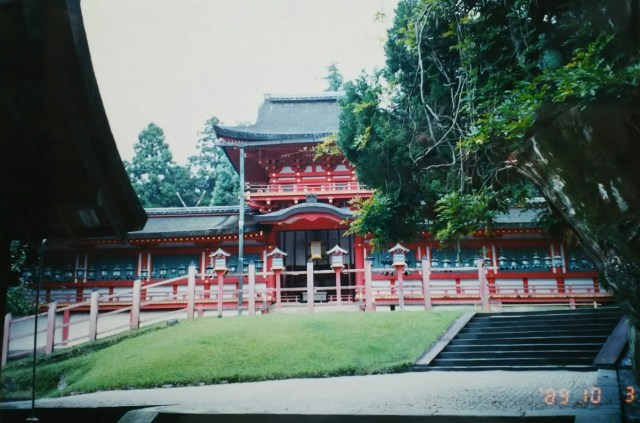
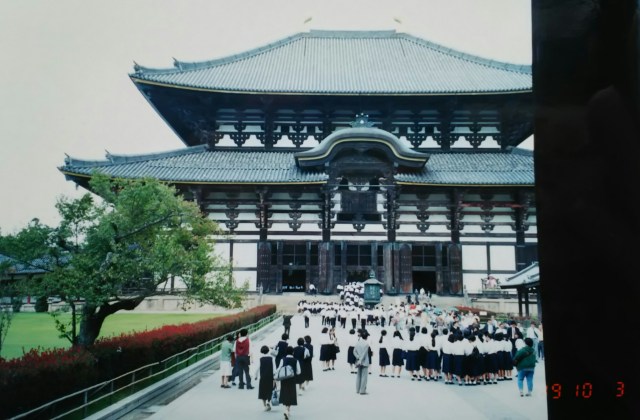
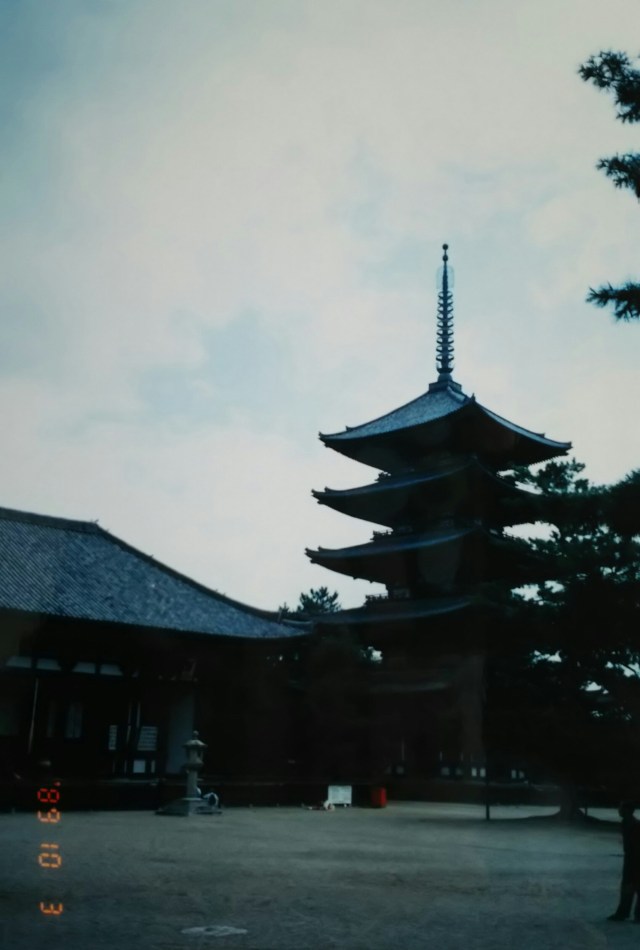
The photos show, in order, Nara Station, then Kasuga Taisha Shrine adjacent to Nara Park, Tōdai-ji Temple, and the five-story pagoda of Kōfuku-ji Temple.
Nara received three World Heritage designations during the Heisei era(1989-2019). In 1993, the “Buddhist Monuments in the Horyu-ji Area”; in 1998, the “Historic Monuments of Ancient Nara”; and in 2004, the “Sacred Sites and Pilgrimage Routes in the Kii Mountain Range,” spanning Mie and Wakayama Prefectures.
Besides Kasuga Taisha, Tōdai-ji, and Kōfuku-ji, sites like the Heijō Palace Site and Yakushi-ji Temple are also included among the eight components of the “Historic Monuments of Ancient Nara.”
In Nagoya, I spent two nights in a park, mingling with the homeless. I intended to use a park in Nara too, but perhaps because it’s a tourist spot, I couldn’t find a suitable place.
“That’s it. Why not try sleeping at the Heijō Palace ruins?”
Suddenly, that vast open space popped into my head. The Heijō Palace ruins are located west of Nara City, on the opposite side of Nara Station from Nara Park. It was about a 5-kilometer journey.
As dusk approached, I walked through the ruins, pushing my bicycle. No other people were in sight. Here and there, traces of what must have been building foundations were visible underfoot.
“I could pitch a tent anywhere here…” But I chickened out. I think I was actually overwhelmed by the sheer emptiness of that square kilometer of open space. As a result, I ended up curling up in my sleeping bag at a covered bus stop, right in front of the Heijō Palace ruins.
When the capital moved to Fujiwara-kyo (and later Heian-kyo), Heijō-kyo’s buildings were dismantled and relocated. After that, the site remained farmland and wasteland until traces were discovered during late Edo period(1603-1868) surveys. The fact that a capital once stood here had been forgotten.
In the Meiji era(1868-1912), local enthusiasts purchased some of the farmland, initiating a preservation movement for the site. Plans for a bypass road and a Kintetsu railway yard were proposed, but today, under national management, the Suzaku Gate has been restored at the southern edge of the once-empty site, and the Daiichi-daigokuden Hall, built in the early Nara period, stands restored on the northern side of the central area. Future plans include considering the underground relocation of the Kintetsu line and prefectural roads currently running through the site.
写真は順に奈良駅、そして奈良公園に隣接する春日大社、東大寺、興福寺の五重塔です。
奈良は平成の間に三つ世界遺産の指定を受けました。1993年「法隆寺地域の仏教建造物」、1998年「古都奈良の文化財」、そして2004年、三重県と和歌山県にまたがる「紀伊山地の霊場と参詣道」です。春日大社、東大寺、興福寺のほかに平城宮跡や薬師寺なども「古都奈良の文化財」の8つの中に含まれています。
名古屋ではホームレスの人たちに混じって二晩とも公園で過ごしました。奈良でも公園を利用するつもりでしたが、やはり観光地ということでしょうか、適当な場所が見つかりません。
「そうだ。平城宮跡で寝てみるか」ふと私の頭の中に、あのただっ広い場所が浮かんだのです。平城宮跡は奈良駅をはさんで奈良公園の反対側、奈良市の西に位置しています。5キロほどの移動です。
夕暮れ迫る中、跡地内を自転車を押しながら歩いてみました。私のほかに人影はありません。所々、足ともに建物の土台となったであろう痕跡があります。
「どこでもテントを張れるけどなぁ……」が、やはりばかれました。思うに1キロ四方にも及ぶ何もない空間に逆に圧倒され、ビビッたようです。結果、平城宮跡を目の前に屋根付きのバス停で寝袋にくるまることとなりました。
平城京は次の藤原京(続いて平安京)へ遷都されると建物は解体、移築されます。その後は江戸時代末期の測量で痕跡が発見されるまで農地や荒れ地のままでした。この地に都があったことなど忘れ去られていたのです。
明治になると地元の有志が一部農地を買い上げ、跡地の保存運動が始まります。バイパス道路や近鉄の操車場などの建設案もありましたが、今では国の管理の下、何もなかった跡地の南端に朱雀門、中央部の北側に奈良時代前期に建てられた第一大極殿が復元されています。将来的には跡地内を走る近鉄や県道の地下化なども検討されています。
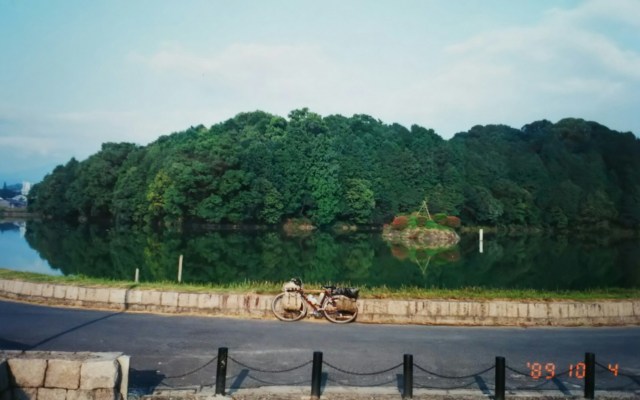

The first photo shows a kofun near the Heijō Palace ruins. Nara has numerous kofun, including famous ones like the Ishibutai Kofun and Takamatsuzuka Kofun. However, only a few are open to the public. Once a kofun is designated as a royal tomb by the Imperial Household Agency, scholarly investigations become restricted, and public access becomes difficult.
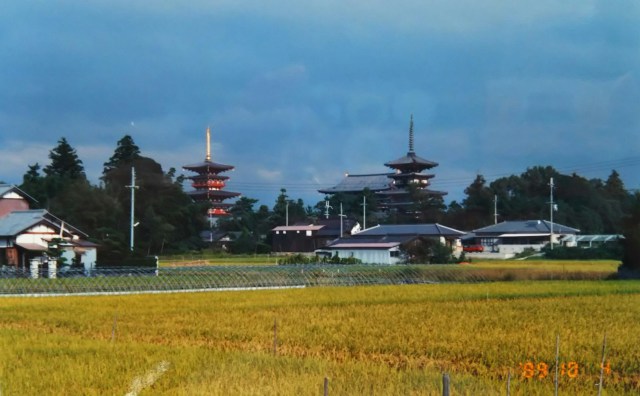
It’s a bit of a detour, but I decided to stop by Ikaruga Town before heading to Osaka. Within Nara, I particularly like the somewhat laid-back atmosphere around Horyu-ji Temple. Besides “ancient times,” another catchphrase for Nara is “Mahoroba.” This scene in Ikaruga, just before the rice harvest, brings that word to mind. But this photo is from 30 years ago; residential development may have already advanced here by now.
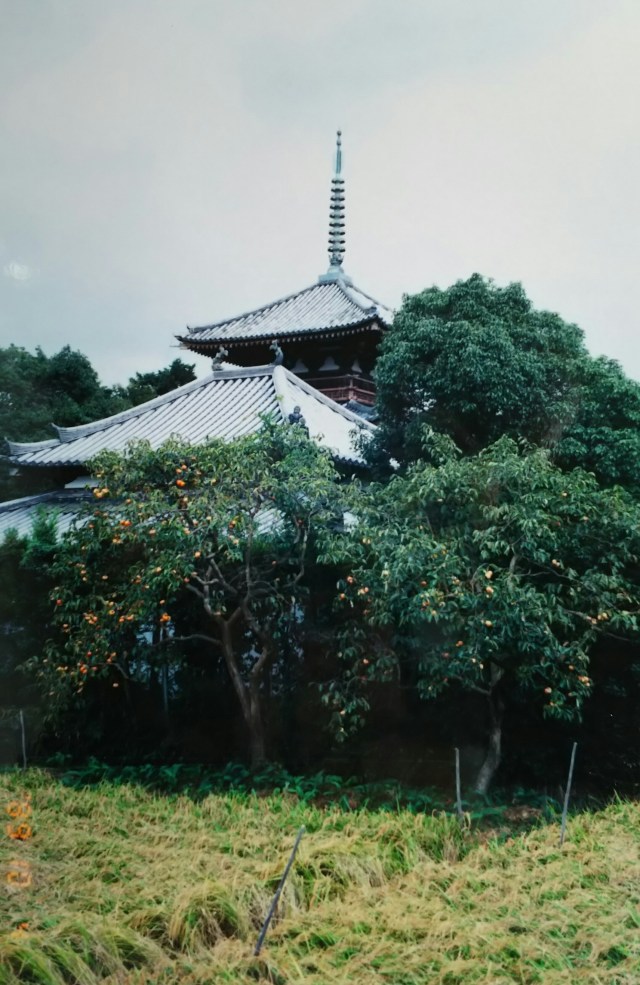
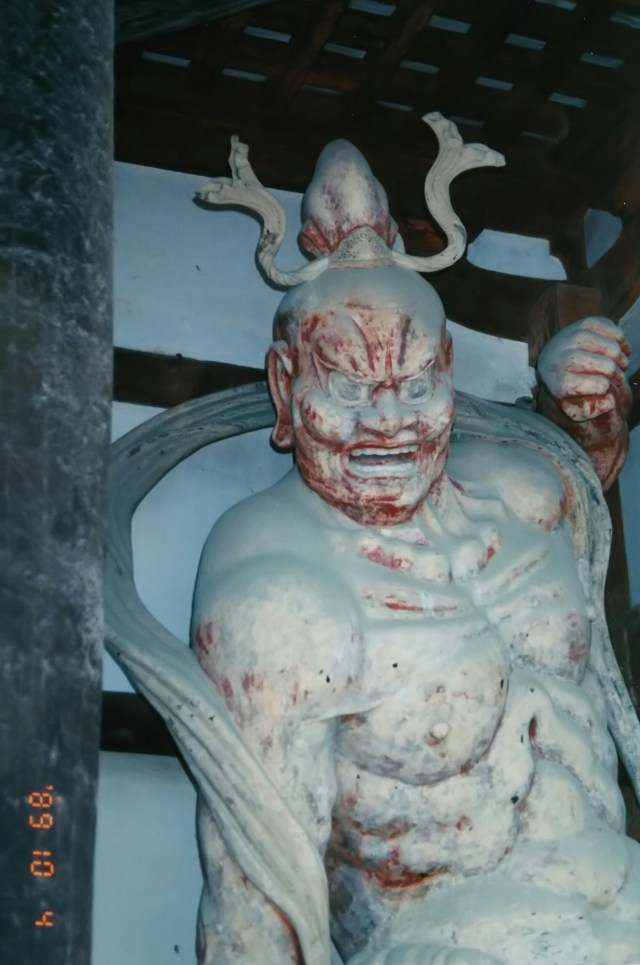
Next, the familiar haiku by Masaoka Shiki: “Eat a persimmon, and the temple bell…” Nara Prefecture ranks second nationally in persimmon production, following Wakayama Prefecture. Beyond the persimmon trees stands the three-storied pagoda of Hokki-ji Temple. The three-storied pagoda of neighboring Hōrinji Temple was excluded from the World Heritage list because it was destroyed by a lightning strike during the war and rebuilt afterward. The lightning strike occurred during the war when metal was being donated for the war effort, leaving the pagoda without a lightning rod. Finally, the five-story pagoda of Hōryū-ji Temple and the Niō guardian statues at the middle gate, specifically the Agyō (angry) one.
After this, I cross the Ikoma Mountains and head towards Osaka.
最初の写真は平城宮跡近くの古墳です。奈良には有名な石舞台古墳や高松塚古墳など数多くの古墳があります。だだし、一般公開されているのは一部の古墳にすぎません。宮内庁に稜墓と認定されると学者による調査なども制約を受け、一般公開も難しくなります。
ちょっと遠回りですが、斑鳩町に寄ってから大阪へ向かうことにしました。私は奈良の中でも法隆寺周辺の何となくノンビリした雰囲気が好きです。「いにしえ」のほかに奈良のキャッチに「まほろば」があります。そんな言葉を思い起こさせてくれる稲刈り間近の斑鳩の風景です。だだこの写真は30年前、すでに宅地化が進んでいるかも、どうでしょう。
続いて、お馴染み正岡子規の俳句「柿食えば鐘が…… 」奈良県の柿の生産量は和歌山県に次いで全国2位。柿の木の向こうは法起寺の三重塔です。お隣の法輪寺の三重塔は戦時中に落雷で焼失、戦後再建されたという理由で世界遺産から外れました。落雷は戦時中の金属供出により避雷針がない時に起きています。最後に法隆寺の五重塔と中門の仁王像、阿形(あぎょう)です。
この後、生駒の山を越えて大阪へ向かいます。
 My Life with Bicycles