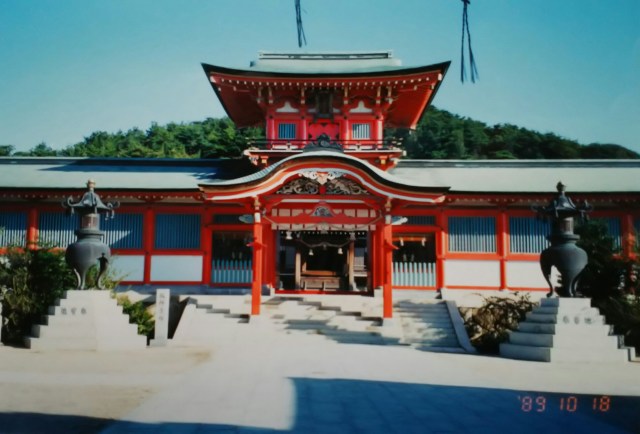
This photo shows Hofu Tenmangu Shrine on the way to Yamaguchi. Tenmangu shrines (Tenjin-sama) enshrine Sugawara no Michizane, the god of learning. Hofu Tenmangu is counted among Japan’s three great Tenjin shrines, alongside Kyoto’s Kitano Tenmangu and Fukuoka’s Dazaifu Tenmangu.
Sugawara no Michizane lost a power struggle within the imperial court and was exiled to Dazaifu, where he died two years later. Hofu was a port of call during his exile journey. Hofu Tenmangu was established in 904, the year after Michizane’s death, and is considered Japan’s oldest Tenmangu shrine.
After parting ways with Route 2 in Hofu and entering Yamaguchi, I rejoined Route 9 for the first time in four days.
写真は山口へ向かう途中の防府天満宮です。天満宮(天神さま)は菅原道真を祀る学問の神様、この防府天満宮は京都の北野天満宮、福岡の太宰府天満宮とならび日本三大天神の一つに数えられています。
菅原道真は朝廷での権力争いに破れて大宰府へ流され、その二年後に亡くなります。流される途中で寄港したのが防府でした。防府天満宮は道真が亡くなった翌年904年に建立され、日本最古の天満宮とされています。
防府で2号線と別れ、山口に入ると四日ぶりに9号線に合流しました。
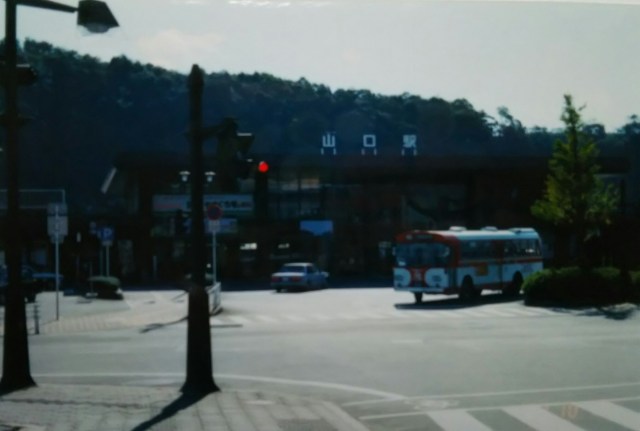


This photo shows Yamaguchi Station. Next is the Yamaguchi Prefectural Government Building, located just past the right turn onto Route 9. The former prefectural government building in the foreground now serves as the Prefectural Government Archives. At that time, Yamaguchi had a population of around 120,000 to 130,000, making it Japan’s smallest prefectural capital. Although its population grew after merging with neighboring towns and villages, it still engages in a friendly rivalry with Tottori and Kofu over being the smallest prefectural capital.
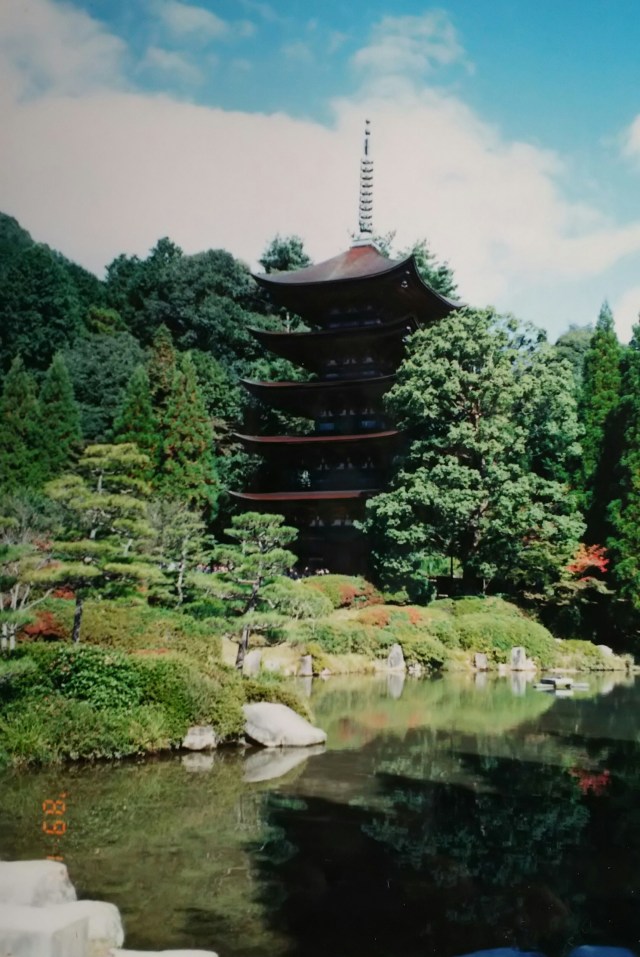
Adjacent to the north of the prefectural office stands the “Five-storied Pagoda of Rurikōji Temple” shown in the photo. Originally, it was the five-storied pagoda of Kōshaku-ji Temple, built by the Ōuchi clan during the Muromachi period. At the beginning of the Edo period, when Mōri Terumoto entered Hagi, he relocated Kōshaku-ji Temple to Hagi. Later, Rurikōji Temple relocated from nearby Niho. This pagoda is counted among Japan’s Three Great Pagodas, alongside the pagodas of Hōryū-ji Temple in Nara and Daigo-ji Temple in Kyoto, all designated as National Treasures.
The area around Rurikōji Temple is now Kōzan Park. Within the park are the Mōri family graves and Chinryūtei Pavilion, where Saigō Takamori, Kido Takayoshi (Katsura Kogorō), and others are said to have discussed plans to overthrow the shogunate. The main hall is located to the left of the pagoda in the photo.
I was told, “There’s a cycling path if you’re going to Shuho Cave.” I rode along that “Yamaguchi Akiyoshi Cave Bicycle Path.”
I rode downhill for a while on the dedicated bicycle path along the Fushino River flowing through the city. Following the road signs, I turned right, passed under the JR Yamaguchi Line, and emerged onto Route 9. Cross Route 9, climb gently, and cross a small pass around the halfway point.
Alternating between the dedicated path and the sidewalk beside the general road, I continued riding until I reached the entrance of Akiyoshi Cave, the endpoint. The Yamaguchi Akiyoshi Cave Cycling Path is 30.8 kilometers long. It was a comfortable ride, free from car traffic pressure, something I hadn’t experienced in a while. However, it was already 5:00 PM, and the cave would close in 30 minutes. I decided to wait for the 8:30 AM opening the next morning and camped near the entrance.
写真は山口駅です。続いては9号線を右折した先の山口県庁です。手前の旧県庁は県政資料館になっています。当時の山口の人口は12、3万人ほどで日本で一番小さな県庁所在地でした。その後、近隣の町村を合併し、人口は増えたものの今でも鳥取と甲府との間で小さな県庁争いを続けています。
県庁の北側に隣接して写真の「瑠璃光寺の五重塔」があります。もともとは室町時代に大内氏によって建立された香積寺の五重塔です。江戸時代の初めに毛利輝元が萩に入った際に香積寺を萩へ移します。そのあと近くの仁保(にほ)から瑠璃光寺が移転しました。この五重塔は奈良法隆寺の五重塔、京都醍醐寺の五重塔と並んで日本三大名塔に数えられ、いずれも国宝に指定されています。
瑠璃光寺周辺は香山公園という公園になっています。園内には毛利家の墓所や西郷隆盛、木戸孝允(桂小五郎)などが討幕の相談をしたといわれる枕柳亭(ちんりゅうてい)があります。本堂は写真の五重塔の左側になります。
「秋芳洞へ行くならサイクリング道路があるよ」と教えてもらいました。その「山口秋芳洞自転車道」を走ります。
市内を流れる椹野川(ふしのがわ)沿いの自転車専用道路をしばらく下ります。道案内に従い右に進路をとり、JR 山口線をくぐると9号線に出ます。9号線を横断、緩やかに上り、行程の半ばあたりで小さな峠を越えます。専用道路と一般道脇の歩道を繰り返しながらさらに走ると終点の秋芳洞の入り口に到着します。山口秋芳洞自転車道の距離は30.8キロ、久々に車のプレッシャーのない快適な走りになりました。ただし時刻は午後5時、あと30分で閉洞です。翌朝8時30分のオープンを待って入り口の近くでテント泊。

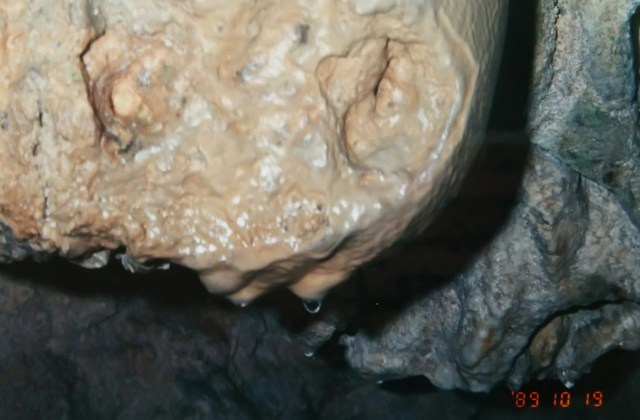
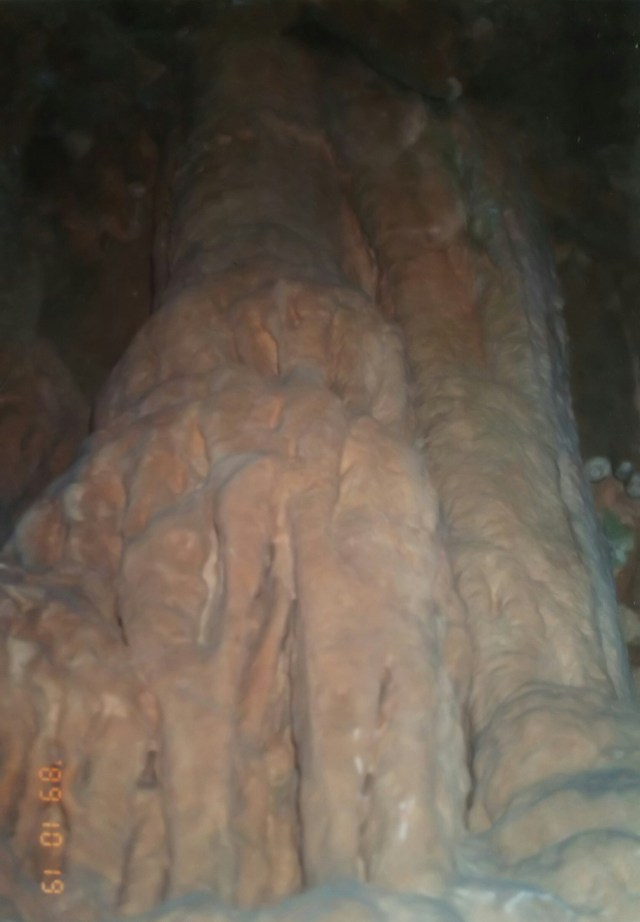
 This photo is a bit unclear, but it shows stalactites inside the cave. Akiyoshi Cave stretches for about 10 kilometers, extending 100 to 200 meters underground. The entrance gapes wide open, and a river flows out from the cave right at your feet. The tourist route is about 1 kilometer long, and an elevator is installed. Along the path, named formations like the “Thousand-Plate Table” and the “Golden Pillar” have explanatory signs. There’s a bridge over the river flowing through the cave, a lake (or pond?) the size of a swimming pool, and a massive space named “Thousand-Tatami Mat Room” measuring 80×175 meters with a height of 35 meters – big enough to build a skyscraper. The scale of the limestone cave was beyond imagination.
Next time, I head from Akiyoshidai to Hagi, then on to the Kanmon Straits.
よくわからない写真ですが、洞窟内の鍾乳石です。秋芳洞の総延長は約10キロ、100~200mの地下に広がっています。入り口はパックリと大きく口を開け、足下には洞窟内から川が流れ出ています。観光ルートは1キロほど、エレベーターも設置されています。順路沿いのポイントに「千枚皿」「黄金柱」など名付きの解説があります。洞内を流れる川にかけられた橋、プールほどの大きさの湖(池?)、また「千畳敷」と名付けられた 80×175m 高さ35mの巨大な空間、ビルが建ちそうです。鍾乳洞の大きさは想像以上でした。
次回、秋吉台から萩、そして関門海峡へ向かいます。
 My Life with Bicycles
山口県庁舎の建物、この写真の建物に似ていませんか、あまり似ていないかもしれませんがね。旧赤坂プリンスホテル、かつて李垠殿下と方子妃殿下が住まわれた洋館です。
https://photos.app.goo.gl/nMLRSXdt9dAyVyp19
LikeLike